Isometric Training: Build Bulletproof Tendons

When it comes to building strength and improving physical performance, the fitness industry is obsessed with motion. We track the concentric (lifting) and eccentric (lowering) phases of a lift, optimizing the stretch and the squeeze. But what if one of the most powerful ways to build a resilient, injury-proof body involves no movement at all?
Welcome to the counter-intuitive world of isometric training.
While lifting heavy weights or grinding through [insert internal link: your recent post on sandbag training] is excellent for building muscle tissue, it often leaves our connective tissues playing catch-up. If you want to train for longevity and true functional capability, you have to prioritize the structures that hold your muscles to your bones.
Here is why stopping your reps dead in their tracks might be the ultimate performance hack for tendon health.
The Muscle vs. Tendon Mismatch
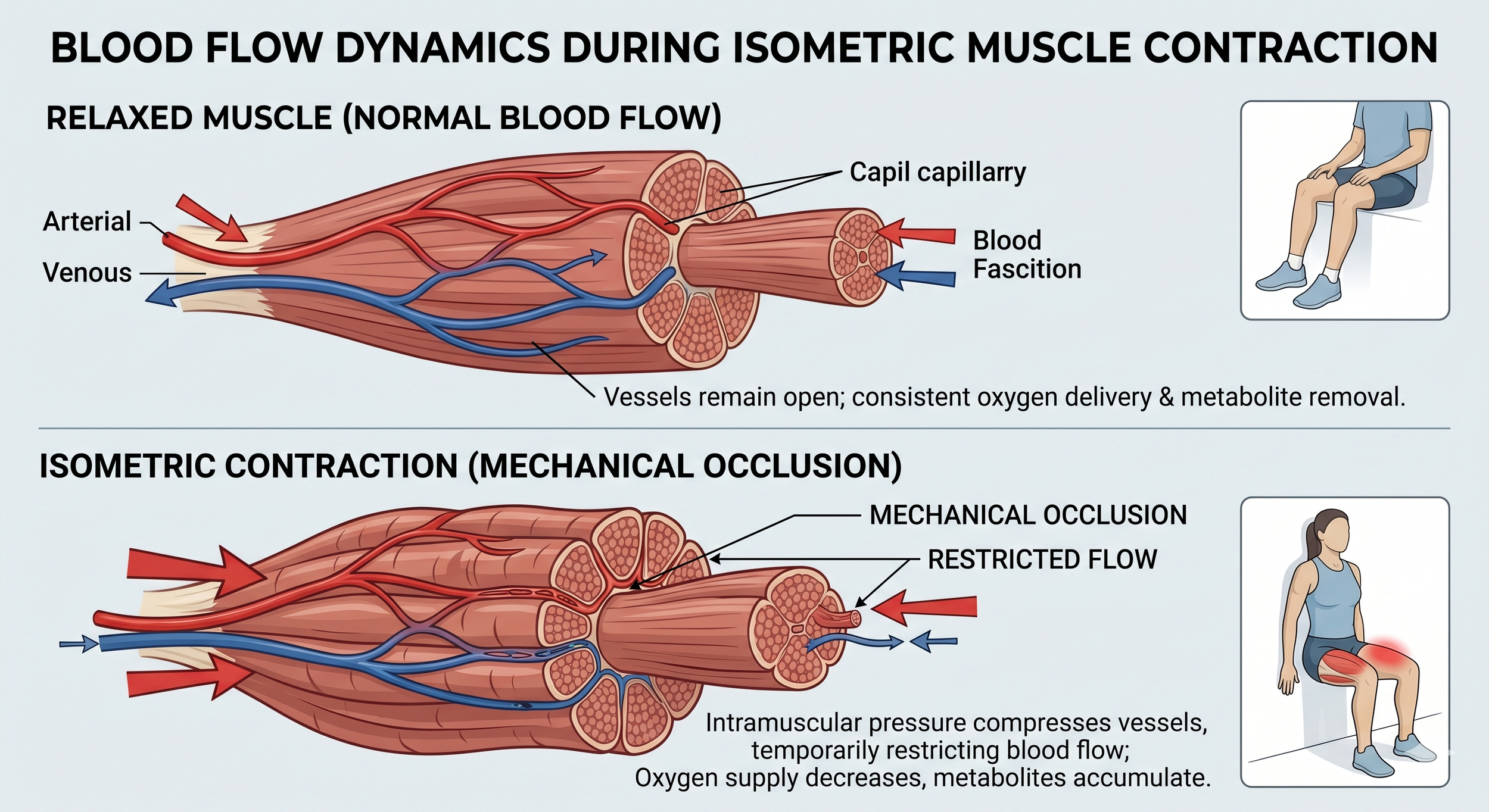
Muscles are highly vascular, meaning they have a rich blood supply. When you stress them, they adapt, repair, and grow relatively quickly. Tendons, on the other hand, are avascular. They are thick, fibrous bands of collagen that have very little blood flow, which means they take significantly longer to adapt to the loads you place on them.
This creates a structural mismatch. Your muscles get stronger faster than your tendons can handle. Eventually, this leads to tendinopathy (often referred to as tendinitis)—that nagging knee, elbow, or Achilles pain that forces you to sideline your training.
This is where isometric exercises come in. An isometric contraction occurs when your muscle fires and generates force, but the joint angle doesn't change. You are pushing or pulling against an immovable object. Because there is no change in muscle length, the sheer stress on the joint is vastly reduced, yet the load on the tendon remains incredibly high.
The "Pain-Killing" Magic of Isometrics for Joint Relief
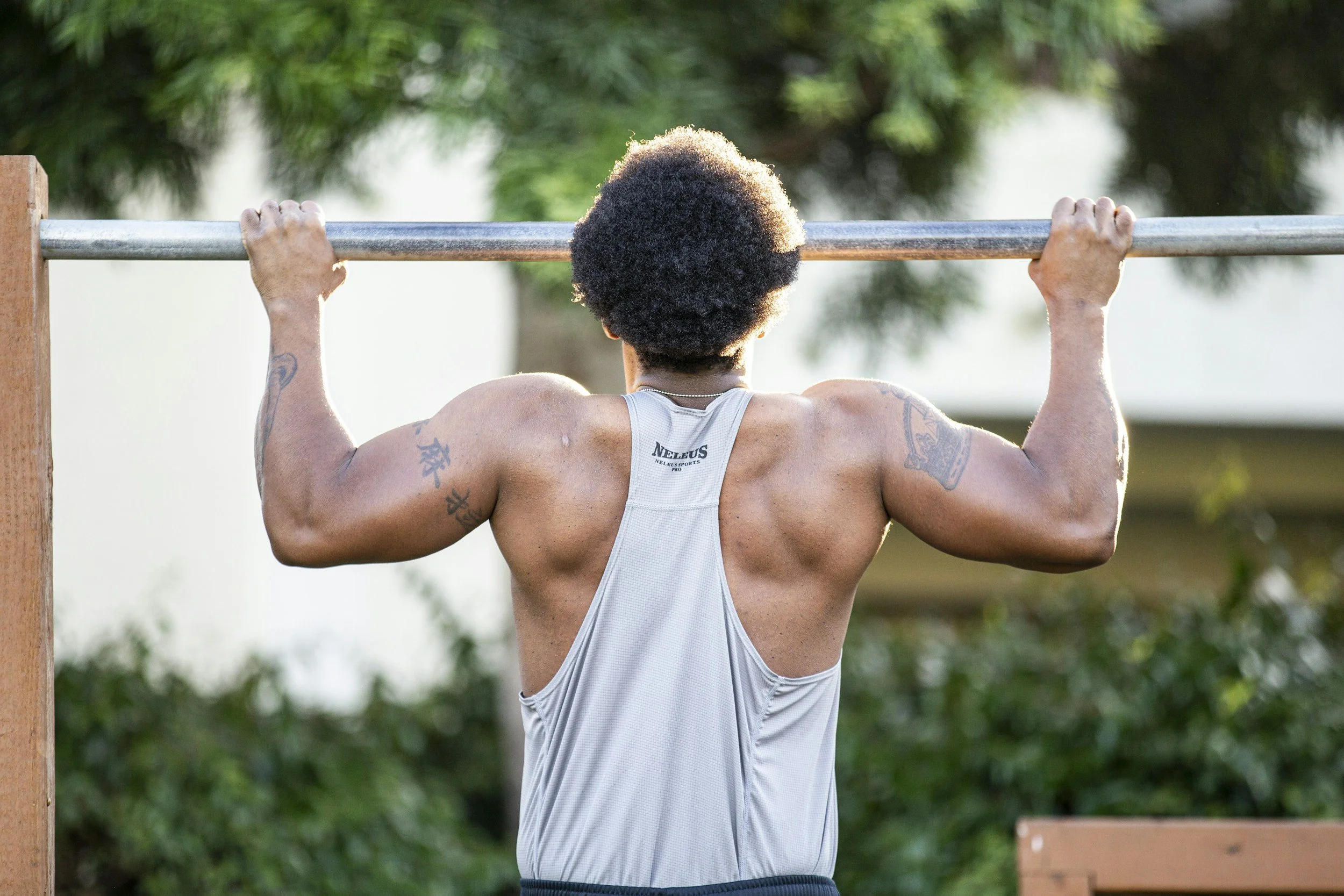
One of the most groundbreaking discoveries in sports physiotherapy over the last decade is the analgesic (pain-relieving) effect of heavy isometric holds.
A landmark study published in the British Journal of Sports Medicine looked at athletes suffering from patellar tendinopathy, commonly known as jumper's knee. The researchers found that a single session of heavy isometric holds reduced tendon pain by up to 86% for over 45 minutes post-exercise.
Furthermore, the isometrics reduced "cortical inhibition"—a neurological safety mechanism where the brain prevents a muscle from firing fully because it senses pain in the tendon. By overriding this inhibition, athletes could train harder and heavier without the associated joint distress. This makes it a perfect complement to stability work, much like [insert internal link: your recent post on lower back stability].
Yielding vs. Overcoming Isometrics
To implement this into your routine and build stiffer, spring-like tendons, you need to understand the two primary types of isometrics:
Yielding Isometrics: Holding a load to resist gravity. Examples include a wall sit, a plank, or pausing at the bottom of a goblet squat. These are fantastic for building local muscular endurance and improving positional stability.
Overcoming Isometrics: Pushing or pulling against an immovable object. Imagine standing in a doorway and trying to push the frame apart, or pulling on a heavily loaded barbell anchored to the floor. You are generating maximum neurological force without actually moving the weight.
Research in the Journal of Applied Physiology demonstrates that heavy overcoming isometrics are highly effective at increasing tendon stiffness and elasticity. In biomechanics, "stiffness" is a highly positive trait for tendons—it means they act like a tightly coiled spring, capable of absorbing impact and transferring force efficiently.
How to Integrate Isometrics into Your Fitness Routine
You don't need to completely overhaul your current programming to reap the benefits. Isometrics can be seamlessly integrated into your current workouts for immediate results:
As a Warm-Up (For Pain Relief): If you have a chronically cranky joint, try performing 3 to 5 sets of 30–45 second yielding isometrics before your main workout. For knees, try a heavy wall sit. For elbows, try a mid-range bicep curl hold.
As a Finisher (For Tendon Remodeling): At the end of your workout, add overcoming isometrics to fatigue the nervous system and load the tendons safely. Set up a barbell in a power rack against the safety pins, and push or pull against the pins as hard as you can for 5-6 seconds. Rest for a minute, and repeat for 4 sets. (Pro tip: If you don't have a rack, heavy-duty resistance bands [insert Amazon affiliate link to resistance bands here] are perfect for overcoming isometrics).
For Positional Weakness: If you struggle at the bottom of a squat or pushup, spend time holding that exact position. Research on long-term adaptations shows that isometric strength has a carryover of roughly 15 degrees of joint angle, meaning holding the bottom position will make you stronger throughout the entire lower half of the movement.
The Bottom Line
True functional fitness isn't just about moving heavy loads; it's about building a structural foundation capable of handling those loads for decades to come. By incorporating heavy isometric holds into your routine, you can bulletproof your tendons, calm an overactive nervous system, and unlock strength you didn't know you had.
Sometimes, the best way to move forward is to hold perfectly still.
