Why Sandbag Training is the Ultimate Cure for "Gym-Only" Strength
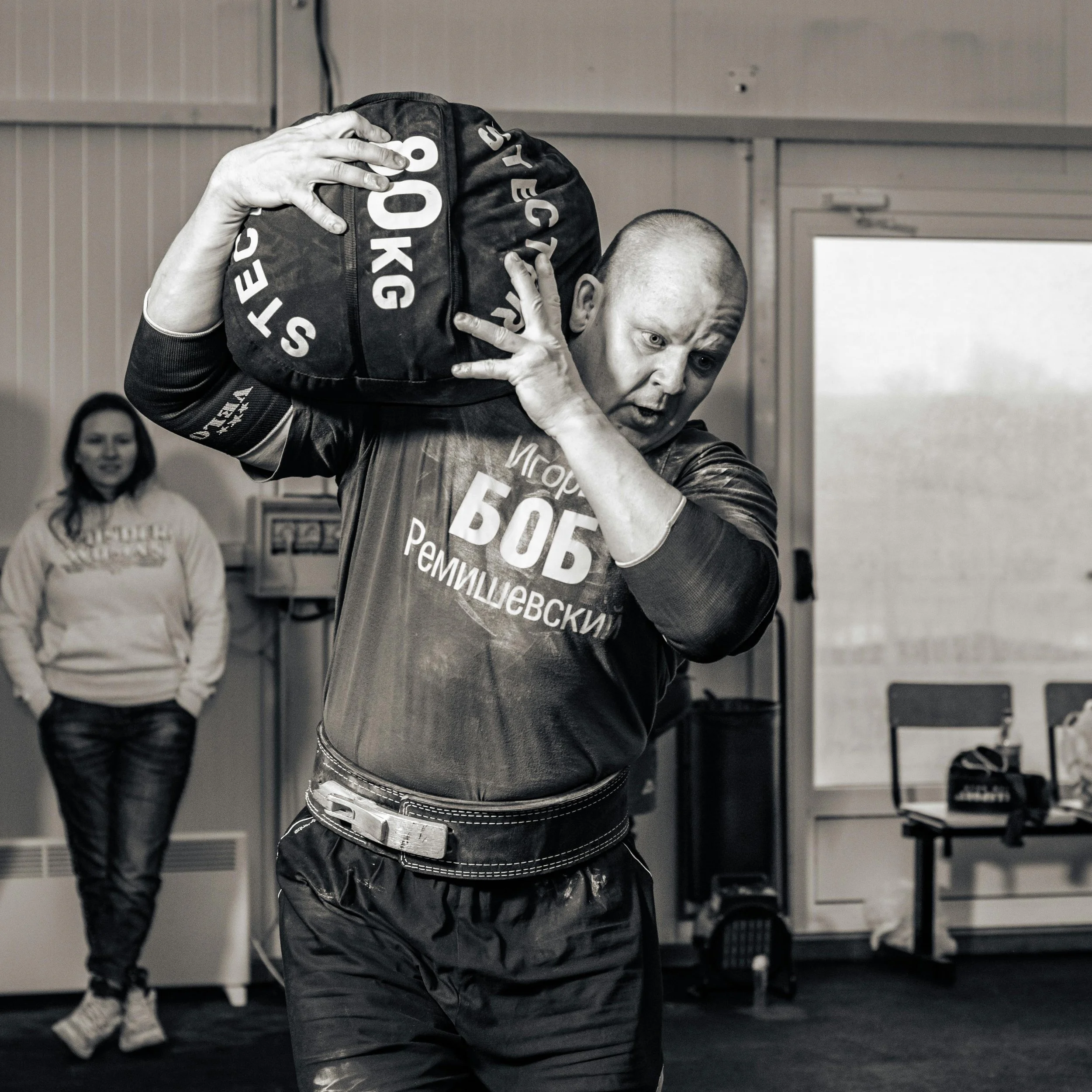
Key Takeaways:
The Problem: Standard gym implements (barbells/dumbbells) are "polite." Their balanced centers of gravity allow your stabilizing musculature to remain dormant, leading to Linear Rigidity.
The Mechanism: Sandbag carries induce High-Intensity Bracing and maximize Thoracic Extension, bulletproofing the spine against shear forces.
The Benefit: It develops Functional Hypertrophy—muscle that isn't just for show, but capable of handling the "rude," shifting loads of the real world.
The Protocol: Integrating the Husafell Carry 2x weekly to bridge the gap between aesthetic gains and true physiological resilience.
If you can deadlift 400 pounds but your lumbar spine "tweaks" when wrestling a heavy bag of salt into your basement, you are suffering from Linear Rigidity. You are "gym strong," but "life fragile."
The dilemma is systemic: barbells and dumbbells are engineered to be ergonomic. They feature knurled grips and perfectly symmetrical centers of gravity. They are "polite" weight. In the real world, weight is "rude." It is shifting, asymmetric, and lacks convenient handles. To solve for this, we must look to the oldest strength implement in human history: The Sandbag.
The Anatomy of "Hollow" Strength
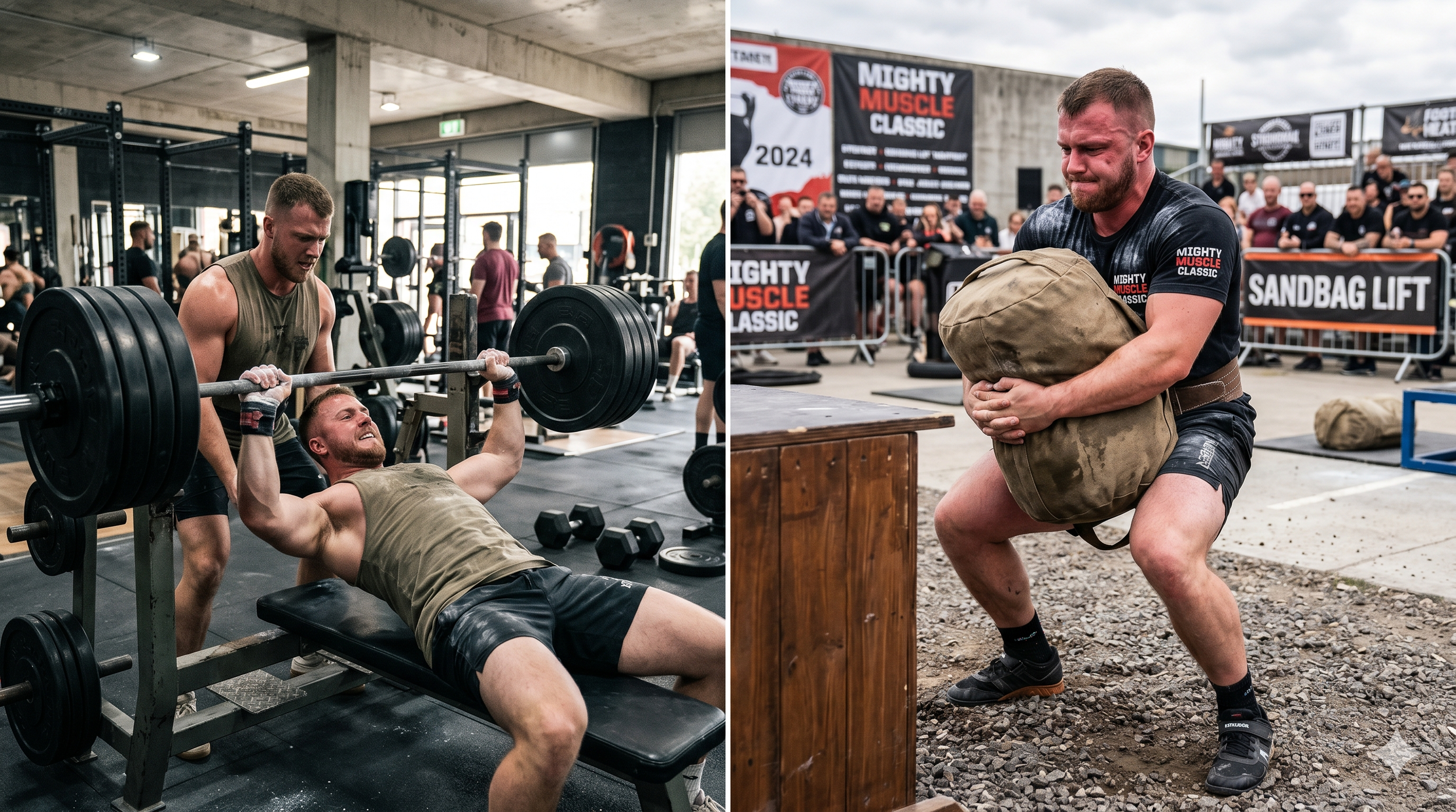
Most modern hypertrophy programs prioritize the "Prime Movers"—the superficial musculature like the quads, glutes, and pectorals. However, true injury resilience is dictated by the Deep Stabilizers. When you lift a balanced load, your nervous system optimizes for efficiency, often bypassing the fine-tuned stabilizing muscles of the trunk. Peer-reviewed research indicates that loaded carries with "odd objects" create a level of torso stiffness and motor unit recruitment that traditional, stable lifts simply cannot replicate.
By training with a sandbag, you aren't just building muscle; you are constructing Total-Body Armor.
The "Husafell" Secret: Thoracic Extension Under Load
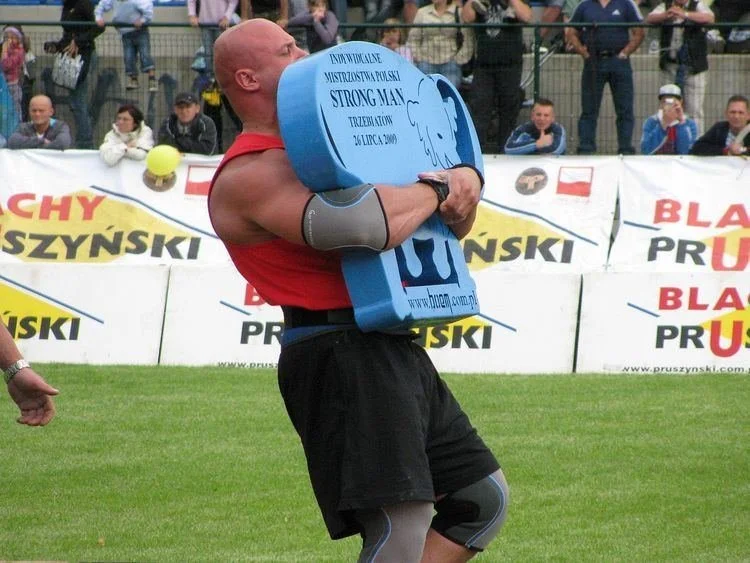
Within the hierarchy of sandbag training, one movement reigns supreme: The Front-Loaded (Husafell) Carry. Named after the legendary 410 lb Icelandic basalt stone, this carry involves "bear-hugging" a heavy load high against the sternum. This posture triggers several critical physiological responses:
The Thoracic Pillars: Because the load creates a significant forward-tilting moment arm, your thoracic erector spinae must fire at near-maximal isometric capacity to prevent kyphosis (rounding of the back).
Intra-Abdominal Pressure (IAP): Hugging a heavy bag forces a unique breathing pattern. You are required to maintain a "braced" core while under respiratory distress. This creates a natural internal airbag that stabilizes the intervertebral discs far more effectively than any external weight belt.
Proprioceptive Feedback: Unlike "dead" weight, sand is "live." As the contents shift with every stride, your nervous system must constantly re-calculate balance and stability. This improves your proprioception—your brain's ability to sense your body's position in space.
The "Armor-Building" Protocol
You do not need a volcanic rock to become Fullsterkur (Icelandic for "Full Strength"). You simply need a high-quality sandbag and a commitment to the "awkward."
Level 1: The Bear Hug March (The Foundation)
Objective: Clean the sandbag to the mid-chest. Wrap your arms around the diameter in a crushing "bear hug."
The Protocol: 5 rounds of 100-foot carries. Maintain a neutral pelvis; do not lean backward (hyperextend) to compensate for the weight.
The Sensory Input: Expect a profound "burn" in the mid-back and a sensation of total-body compression.
Level 2: The Husafell High-Carry (The Elite Finisher)
Objective: Position a heavier, tapered bag higher on the chest, nearly under the chin.
The Protocol: 3 sets of "Max Distance" in 60 seconds.
The Benefit: This heightens the leverage against your spine, forcing the core to work in overdrive to prevent collapse.
Conclusion: Build a Pillar, Not a Shell
Standard hypertrophy training is excellent for aesthetics, but sandbag carries are for Utility. By embracing the shifting, lung-crushing load of a carry, you are training your body to be an unshakeable pillar. Whether you are an athlete seeking an edge in contact sports or a "tactical athlete" navigating the rigors of daily life, it is time to stop just lifting and start carrying.
Frequently Asked Questions (FAQ)
Q: Will this exacerbate lower back pain? A: When executed with a "tall" spine and proper IAP, sandbag carries are often used to rehabilitate back pain by strengthening the deep stabilizers. However, avoid "leaning back" to rest the weight on your hips.
Q: Can I substitute this with a Kettlebell Goblet Carry? A: While beneficial, a kettlebell is a "dead" weight. The shifting nature of a sandbag provides the reactive strength necessary for real-world applications where loads are unpredictable.
Q: How often should I program carries? A: Due to the high neurological demand and systemic fatigue, these are best utilized as "finishers" 2 times per week.
Works Cited
McGill, S. M., et al. (2009).Comparison of different strongman events: trunk muscle activation and lumbar spine motion, load, and stiffness.Journal of Strength and Conditioning Research.
Winwood, P. W., et al. (2014).The strongman squeeze: A review of the physiological demands of loaded carries.National Strength and Conditioning Association (NSCA).
Hindley, W., et al. (2021).The Effects of Loaded Carries on Core Stability and Gait Mechanics.Journal of Physical Therapy Science.
