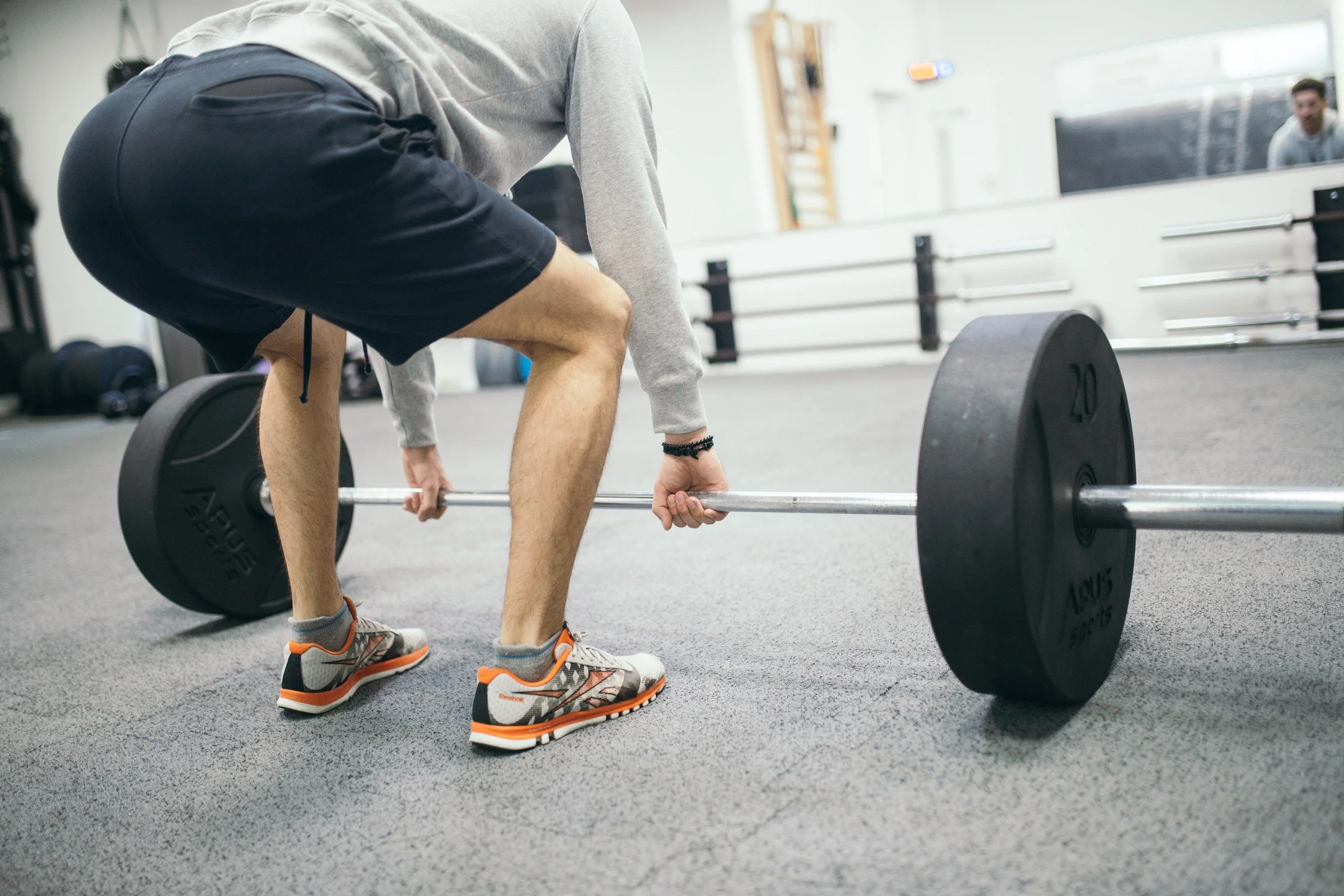
Photo: Nenad Stojkovic / Wikimedia Commons (via Flickr), CC BY 2.0 (cropped and resized). A barbell deadlift.
Key Takeaways
Some weight lost is lean mass. On tirzepatide, about 26% of weight lost was lean mass, similar to placebo (Look et al., 2025).
Lean mass isn't just muscle. It includes organs, bone and fluid (Neeland et al., 2024).
Lifting shifts the trade-off. On the same diet, resistance training limited lean mass loss to 2%, versus 5% with aerobic training (Villareal et al., 2017).
Protein alone falls short. Experts call more protein without lifting "likely inadequate" (Mozaffarian et al., 2025).
Strength training on GLP-1 medications deserves a plan, because these drugs can take off a lot of weight quickly. In the main semaglutide trial, adults lost an average of 14.9% of their body weight over 68 weeks, versus 2.4% on placebo (Wilding et al., 2021). Some of that loss is tissue you want to keep. Here is what the research shows about muscle on these medications, and what you can do about it.
This article is educational, not medical advice. If you take one of these medications, work with your prescribing clinician on your plan, including exercise and diet changes. Nothing here is dosing advice.
How Much Muscle Do People Lose on GLP-1 Medications?
Some of the clearest data come from a body-scan substudy of SURMOUNT-1, a 72-week tirzepatide trial that measured 160 adults with DXA (dual-energy X-ray absorptiometry). Participants got lifestyle counseling for a 500-calorie daily deficit and at least 150 minutes of activity a week, "without a specific strength training protocol" (Look et al., 2025).
On tirzepatide, people lost 21.3% of their body weight, 33.9% of their fat mass and 10.9% of their lean mass, or 15.9 kg of fat and 5.6 kg of lean mass on average. The weight lost was 74% fat and 26% lean, almost the same split as placebo.
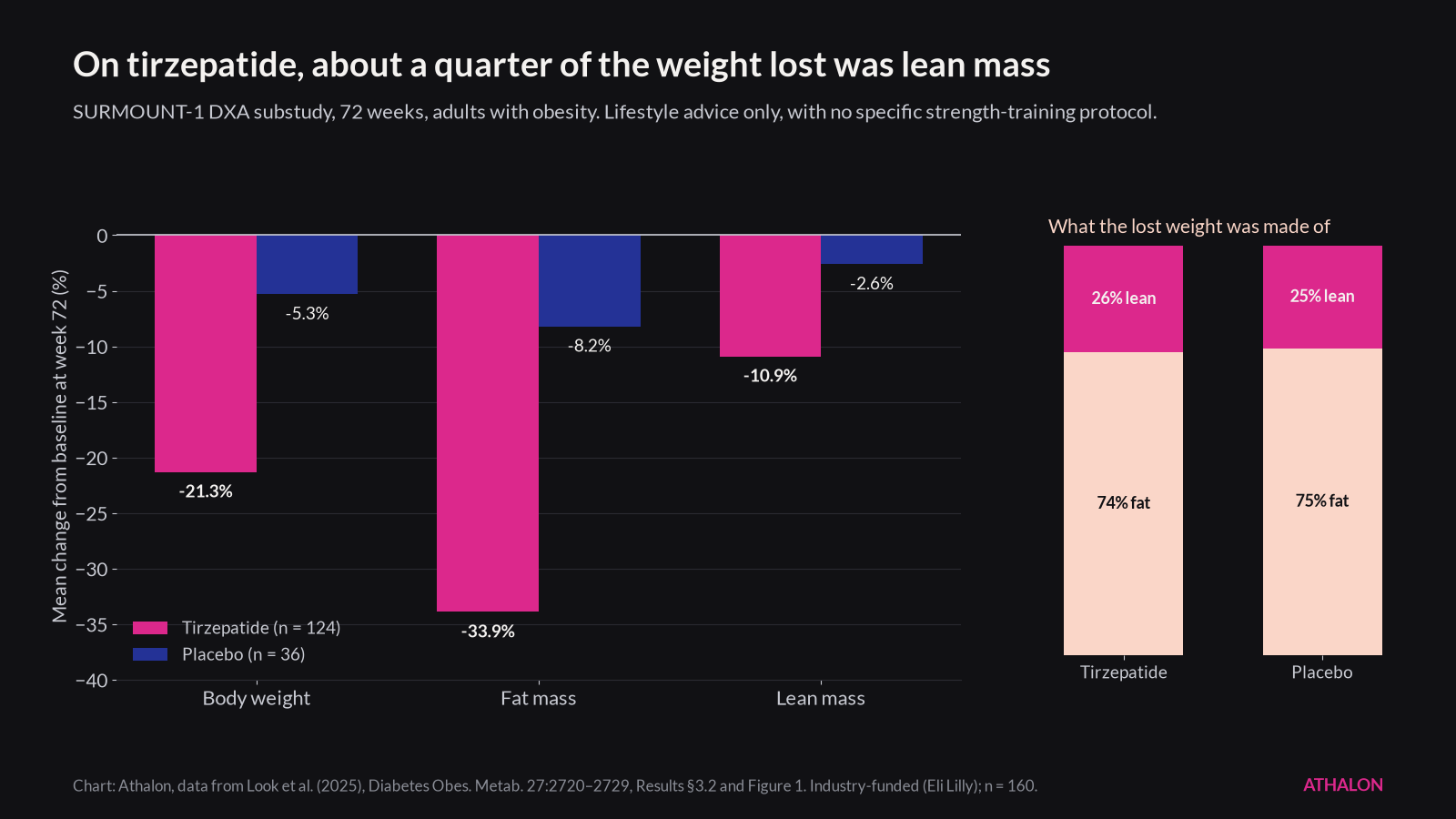
Chart: Athalon, data from Look et al. (2025), Diabetes, Obesity and Metabolism, Results and Figure 1. The study was funded by Eli Lilly, which makes tirzepatide.
Other trials vary. The same paper notes that the semaglutide STEP 1 body-scan substudy found a 60/40 fat-to-lean split. A 2026 review of 35 studies found a median of 28.3% of weight lost on incretin drugs came from muscle-related measures, with a wide range (Batsis et al., 2026). A network meta-analysis found tirzepatide and semaglutide were "among the least effective in preserving lean mass," even though they produced the most weight and fat loss (Karakasis et al., 2025).
Lean Mass Is Not the Same as Muscle
On a DXA scan, lean mass includes muscle plus organs, bone, fluids and the water in fat tissue (Neeland et al., 2024). Some loss is expected when a body gets smaller. Based on MRI studies, Neeland and colleagues conclude that muscle changes on these drugs "appear to be adaptive," roughly in line with the weight lost.
A 2026 study pairing mouse experiments with a 12-week trial in patients with type 2 diabetes and overweight or obesity agreed. Patients improved their body composition "without negatively affecting strength" (Langer et al., 2026). So the picture is not "these drugs destroy muscle." You will probably lose some lean tissue, and how much muscle you keep is partly up to you.
Why Strength Training on GLP-1 Medications Matters
One review estimated lean mass loss on these drugs at "∼10% or ∼6 kg," which it called "comparable to a decade or more of aging." It also notes that supervised resistance training lasting more than 10 weeks can add about 3 kg of lean mass and about 25% strength (Locatelli et al., 2024).
The best controlled evidence for lifting during weight loss comes from diet studies. In an NIH-funded trial, 160 adults aged 65 and older with obesity were randomly assigned to a control group or to the same six-month diet program plus aerobic, resistance or combined training (Villareal et al., 2017). Weight fell 9% in every exercise group, but the results differed:
Lean mass fell 5% with aerobic, 3% with combined and 2% with resistance training.
Strength rose 4%, 18% and 19%, respectively.
Hip bone density fell 3% with aerobic, 1% with combined and 0.5% with resistance training.
Physical function improved most with combined training (21%, versus 14% in each of the other groups).
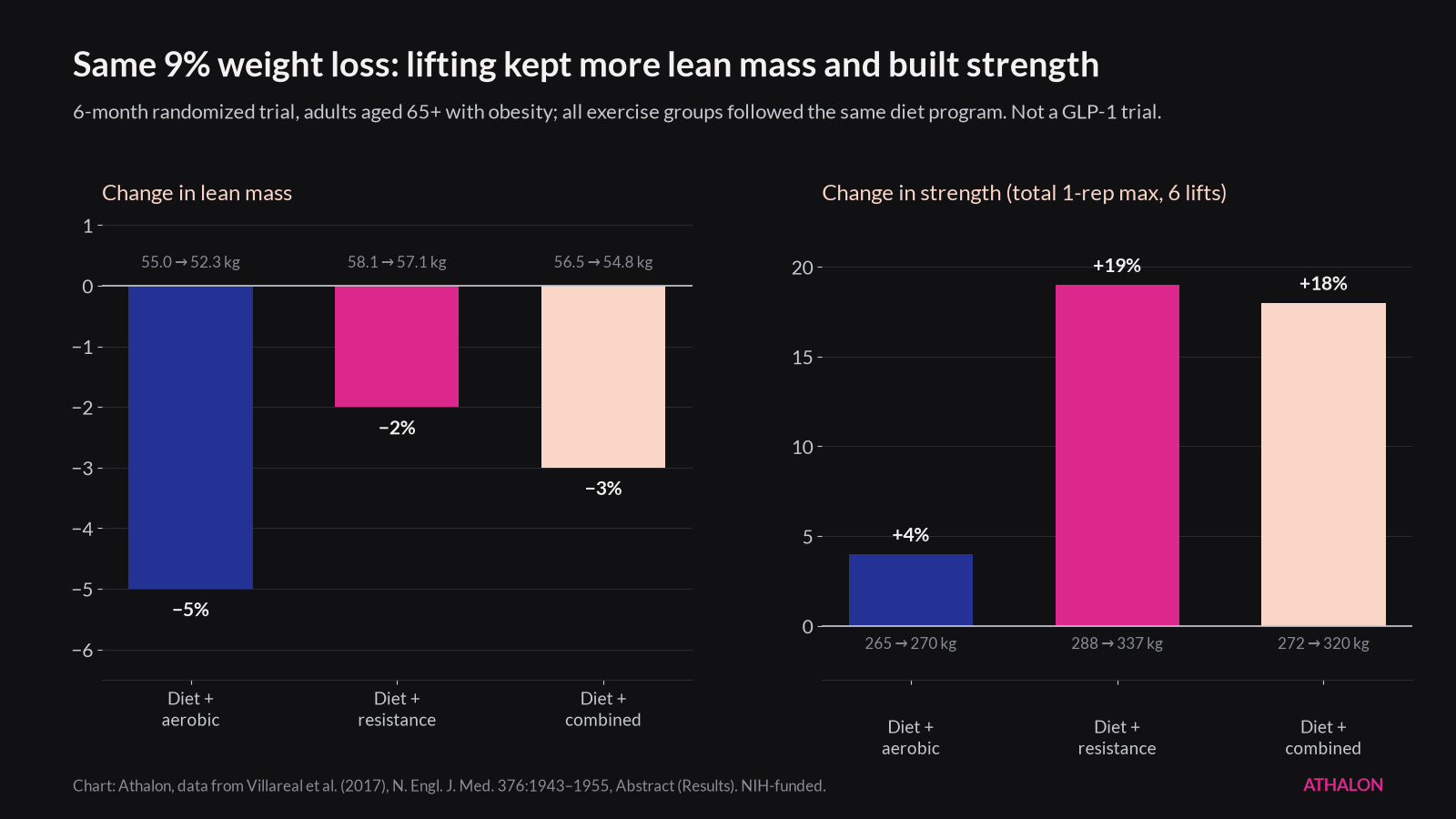
Chart: Athalon, data from Villareal et al. (2017), New England Journal of Medicine, Abstract. This trial tested diet-induced weight loss in older adults, not GLP-1 medications.
Direct GLP-1 evidence is thin. In a small 2026 study, 11 adults on semaglutide added eight weeks of supervised lifting, three sessions a week (Hill et al., 2026). Leg press strength rose by 43.4 kg, fat mass fell and fat-free mass held steady. With no control group, though, the authors "cannot definitively distinguish" the effect of training from the drug and time. Larger randomized trials are under way, partly because there is "limited empirical evidence" on reducing muscle loss during GLP-1 therapy (Alawadhi et al., 2026).
Protein: Necessary, Not Sufficient
Appetite drops on these medications, which can make protein hard to get. A joint advisory from four medical and nutrition organizations notes the adult protein RDA of 0.8 g/kg/day and that "higher targets, such as 1.2–1.6 g/kg/day, have also been proposed during active weight reduction" (Mozaffarian et al., 2025). It also offers an absolute range of 80–120 g a day and suggests lower-volume, nutrient-dense protein foods such as fish, eggs, Greek yogurt, cottage cheese and nuts.
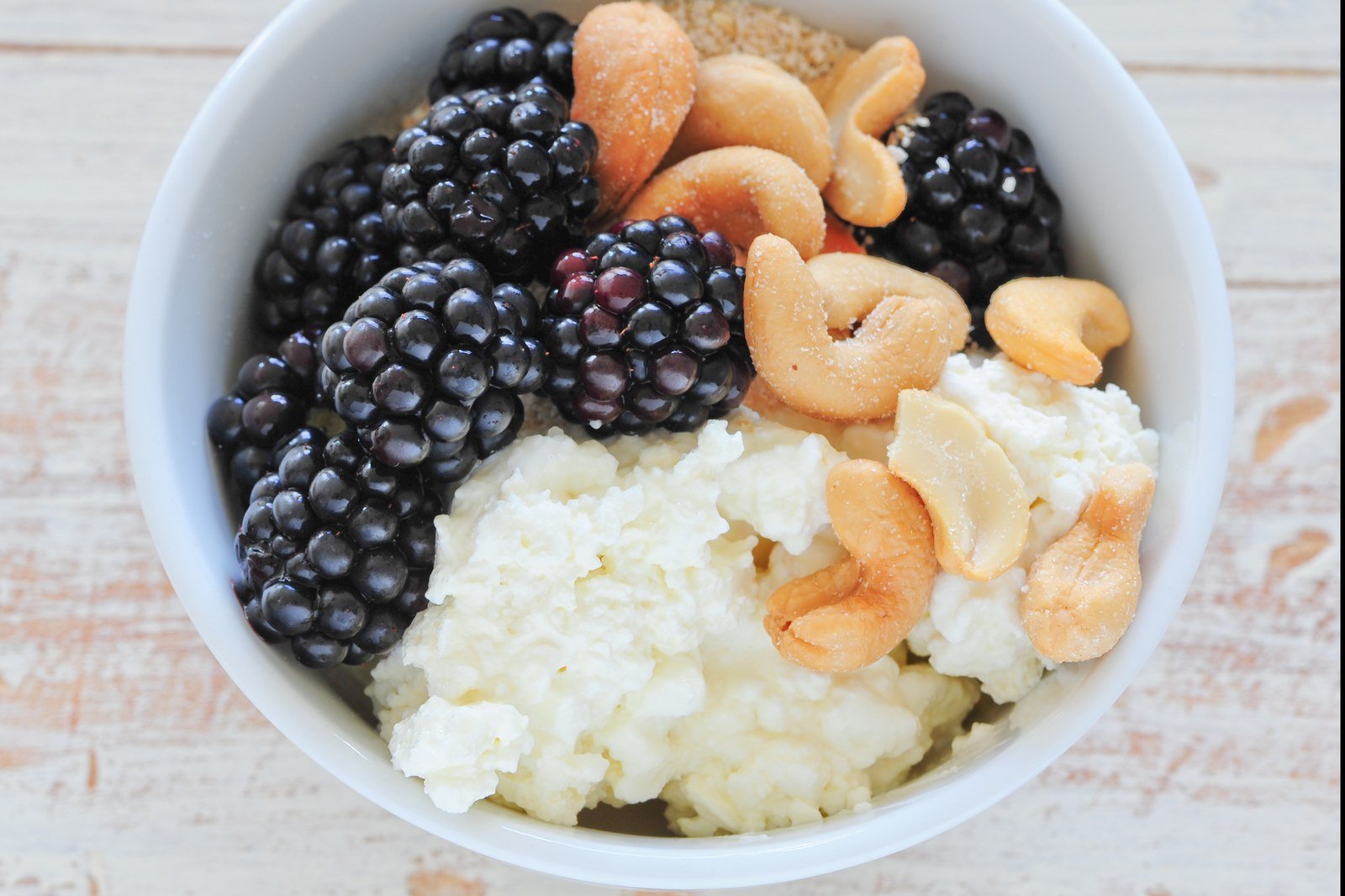
Photo: Jules Clancy / Wikimedia Commons (via Flickr), CC BY 2.0 (cropped and resized). Cottage cheese with blackberries and cashews, one example of a protein-rich snack.
The key line: "increased protein intake alone is likely inadequate to support the preservation of muscle mass in the absence of structured resistance/strength training." Protein supplies the raw material; training gives muscle a reason to keep it. The advisory notes there is no consensus on whether targets should be based on actual weight, adjusted weight or fat-free mass, so set yours with your clinician or a registered dietitian.
How to Strength Train on a GLP-1, Based on the Evidence
Few trials have tested exercise programs with GLP-1 drugs, so most of these points come from weight-loss research in general. Each notes what has been tested.
Lift about three times a week. Expert guidance, not a trial result: the advisory recommends strength training "at least three times weekly plus at least 150 min of moderate-intensity aerobic exercise weekly" (Mozaffarian et al., 2025). That can also help you meet the WHO's call for regular muscle-strengthening activity (Bull et al., 2020).
Train the whole body and add load over time. Tested: the older-adult trial used nine machine exercises, progressing from 1–2 sets of 8–12 reps at 65% of a one-rep max to 2–3 sets at about 85% (Villareal et al., 2017). In the semaglutide study, sessions of about 40–45 minutes raised strength (Hill et al., 2026).
Keep cardio, but don't let it replace lifting. Tested: combined training improved function most, while aerobic training alone lost the most lean mass and hip bone density (Villareal et al., 2017).
Track strength, not just the scale. Inferred: the scale can't separate fat from muscle, and the 2026 review found "no study reported objective physical function outcomes" (Batsis et al., 2026). Your lift numbers are a practical check.
Get enough protein from compact, protein-dense foods. Expert guidance. Agree on a target with your care team (Mozaffarian et al., 2025).
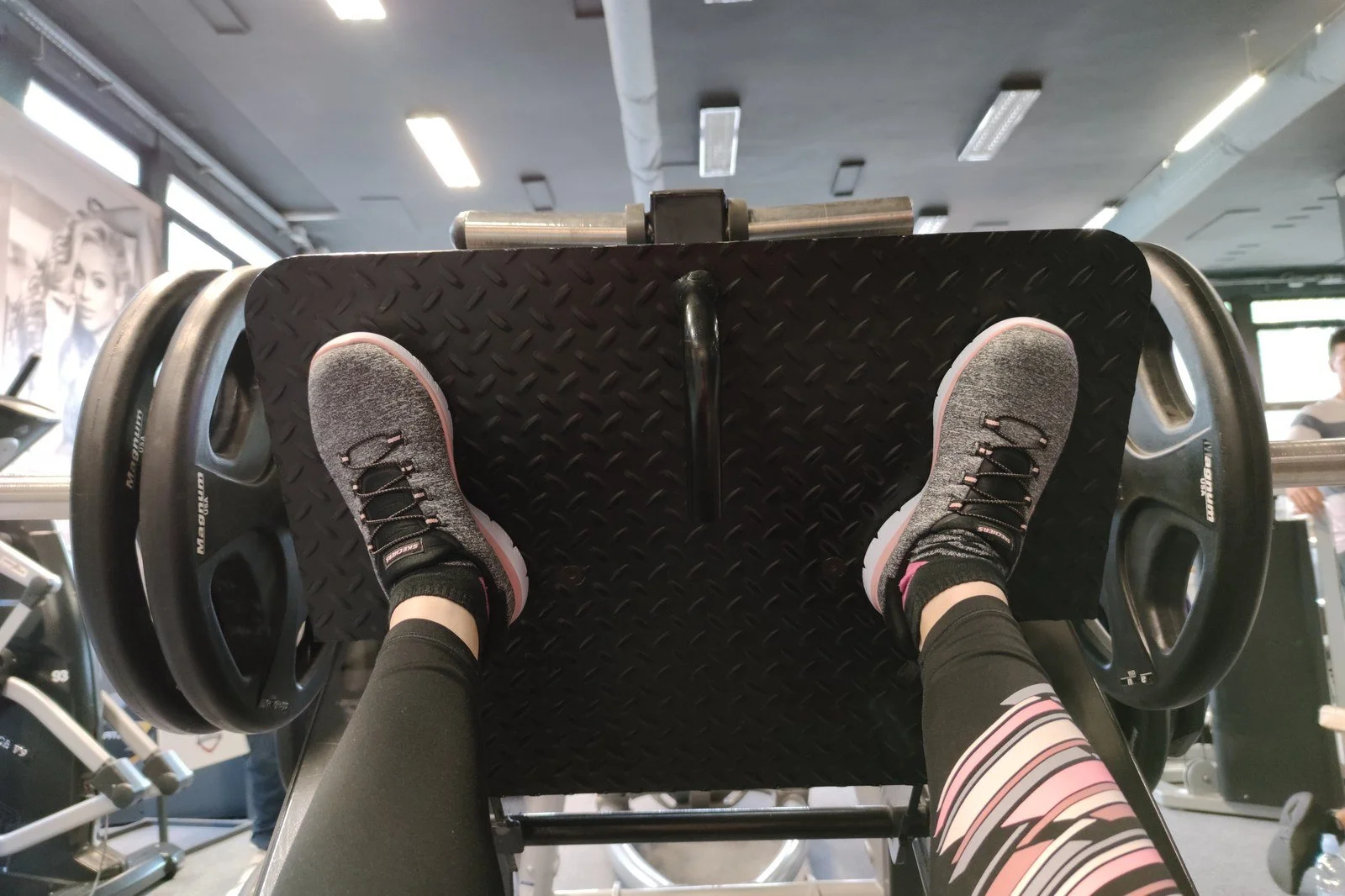
Photo: Teemeah / Wikimedia Commons, CC BY-SA 4.0 (cropped and resized). A plate-loaded leg press, one of the machine lifts used in the trials above.
Limitations and Safety
The best muscle-sparing data come from diet trials in older adults, not from people on GLP-1 drugs. The semaglutide lifting study had 11 people and no control group. Several drug trials were funded by the drugmakers. Lean mass is an imperfect stand-in for muscle, and few studies measured strength or function.
Start at a level that fits you now. Exercise-related musculoskeletal injuries did occur in the older-adult trial (Villareal et al., 2017). If you are on one of these medications, have a medical condition or are new to lifting, check with your clinician first and get coaching on technique.
Conclusion: Lose the Fat, Keep the Engine
GLP-1 medications can produce large weight loss, and some of it will be lean tissue. In the SURMOUNT-1 body-scan study, the lean share was similar to placebo, and diet trials show that training can shift it. Progressive lifting, some cardio and enough protein is the combination with the strongest support. Expect clearer answers as the first large randomized trials report.
Track the number that matters. If you're working to keep your strength while your weight changes, it helps to see the trend. In the Athalon app you can log your lifts and runs, create competitions with friends, and see where you stand on the leaderboard. Download Athalon on the App Store.
Frequently Asked Questions
Q: Do you lose muscle on GLP-1 medications?
A: Most people lose some lean mass. In SURMOUNT-1, about 26% of the weight lost on tirzepatide was lean mass, similar to placebo (Look et al., 2025). Lean mass includes more than muscle, though (Neeland et al., 2024).
Q: How often should you strength train on a GLP-1?
A: A joint advisory recommends strength training at least three times a week plus at least 150 minutes of moderate aerobic exercise, tailored to your fitness level (Mozaffarian et al., 2025).
Q: How much protein do you need on a GLP-1?
A: The same advisory notes proposed targets of 1.2–1.6 g/kg/day during active weight loss, or 80–120 g/day, and says protein alone is likely not enough without strength training. Set your target with your clinician (Mozaffarian et al., 2025).
Q: Can lifting really protect muscle during weight loss?
A: In a six-month diet trial in older adults, resistance training limited lean mass loss to 2%, versus 5% with aerobic exercise, while strength rose 19% (Villareal et al., 2017). GLP-1 lifting trials are still small (Hill et al., 2026).
References
Look, M., Dunn, J. P., Kushner, R. F., Cao, D., Harris, C., Gibble, T. H., Stefanski, A., & Griffin, R. (2025). Body composition changes during weight reduction with tirzepatide in the SURMOUNT-1 study of adults with obesity or overweight. Diabetes, Obesity and Metabolism, 27(5), 2720–2729. https://doi.org/10.1111/dom.16275
Wilding, J. P. H., Batterham, R. L., Calanna, S., Davies, M., Van Gaal, L. F., Lingvay, I., McGowan, B. M., Rosenstock, J., Tran, M. T. D., Wadden, T. A., Wharton, S., Yokote, K., Zeuthen, N., Kushner, R. F., & STEP 1 Study Group. (2021). Once-weekly semaglutide in adults with overweight or obesity. New England Journal of Medicine, 384(11), 989–1002. https://doi.org/10.1056/NEJMoa2032183
Batsis, J. A., Gavras, A., Gross, D. C., Cheever, C. R., Da Silva, B. R., Meira Filho, L. F., Jones, E. P., Batchek, D., Khandpekar, S., Patel, R., Awkal, B., Pape, A., Bahna, M., Zamboni, M., & Prado, C. M. (2026). Effect of incretin-based and nonpharmacologic weight loss on body composition: A systematic review. Annals of Internal Medicine, 179(7), 996–1013. https://doi.org/10.7326/ANNALS-25-00478
Karakasis, P., Patoulias, D., Fragakis, N., & Mantzoros, C. S. (2025). Effect of glucagon-like peptide-1 receptor agonists and co-agonists on body composition: Systematic review and network meta-analysis. Metabolism, 164, 156113. https://doi.org/10.1016/j.metabol.2024.156113
Neeland, I. J., Linge, J., & Birkenfeld, A. L. (2024). Changes in lean body mass with glucagon-like peptide-1-based therapies and mitigation strategies. Diabetes, Obesity and Metabolism, 26(Suppl. 4), 16–27. https://doi.org/10.1111/dom.15728
Langer, H. T., Gilmore, N. K., Hayden, C. M. T., Roux, J., Bariohay, B., Rouquet, T., Awada, M., Marcotorchino, J., Bournot, L., Nunn, E., Titchenell, P. M., Liskiewicz, D., Müller, T. D., Anyiam, O., Atherton, P. J., Idris, I., Hentschel, A., Roos, A., Haritonow, N., . . . Baar, K. (2026). Weight loss with GLP-1 medicines does not result in a disproportionate loss of muscle mass or function in obese mice and humans. Cell Reports Medicine, 7(3), 102665. https://doi.org/10.1016/j.xcrm.2026.102665
Locatelli, J. C., Costa, J. G., Haynes, A., Naylor, L. H., Fegan, P. G., Yeap, B. B., & Green, D. J. (2024). Incretin-based weight loss pharmacotherapy: Can resistance exercise optimize changes in body composition? Diabetes Care, 47(10), 1718–1730. https://doi.org/10.2337/dci23-0100
Villareal, D. T., Aguirre, L., Gurney, A. B., Waters, D. L., Sinacore, D. R., Colombo, E., Armamento-Villareal, R., & Qualls, C. (2017). Aerobic or resistance exercise, or both, in dieting obese older adults. New England Journal of Medicine, 376(20), 1943–1955. https://doi.org/10.1056/NEJMoa1616338
Hill, C. K., Rattenborg, J., Martens, A., Houchlei, S., Vleisides, B., Verkler, A., Mclean, A., Buehler, S., Smith, C., Goddard, S., Dinyer-McNeely, T., McShan, K., & Gordon, R. A. (2026). Combining resistance training with semaglutide use: Effects on body composition, muscle morphology, strength, and indices of metabolism. Obesities, 6(5), 67. https://doi.org/10.3390/obesities6050067
Alawadhi, A. A., Alroudhan, D., Alsaeed, D. J., Almarshad, B. W., Alshehabi, D. H., Allahou, B. A., Mashankar, A., Al Ozairi, E., & Gray, S. (2026). LEAN mass Preservation with Resistance Exercise and Protein during semaglutide and tirzepatide therapy (LEAN-PREP study): A protocol for a randomised controlled trial. BMJ Open, 16(4), e116911. https://doi.org/10.1136/bmjopen-2026-116911
Mozaffarian, D., Agarwal, M., Aggarwal, M., Alexander, L., Apovian, C. M., Bindlish, S., Bonnet, J., Butsch, W. S., Christensen, S., Gianos, E., Gulati, M., Gupta, A., Horn, D., Kane, R. M., Saluja, J., Sannidhi, D., Stanford, F. C., & Callahan, E. A. (2025). Nutritional priorities to support GLP-1 therapy for obesity: A joint Advisory from the American College of Lifestyle Medicine, the American Society for Nutrition, the Obesity Medicine Association, and The Obesity Society. Obesity, 33(8), 1475–1503. https://doi.org/10.1002/oby.24336
Bull, F. C., Al-Ansari, S. S., Biddle, S., Borodulin, K., Buman, M. P., Cardon, G., Carty, C., Chaput, J. P., Chastin, S., Chou, R., Dempsey, P. C., DiPietro, L., Ekelund, U., Firth, J., Friedenreich, C. M., Garcia, L., Gichu, M., Jago, R., Katzmarzyk, P. T., . . . Willumsen, J. F. (2020). World Health Organization 2020 guidelines on physical activity and sedentary behaviour. British Journal of Sports Medicine, 54(24), 1451–1462. https://doi.org/10.1136/bjsports-2020-102955
