How the Military Uses Competition to Hack Human Limits
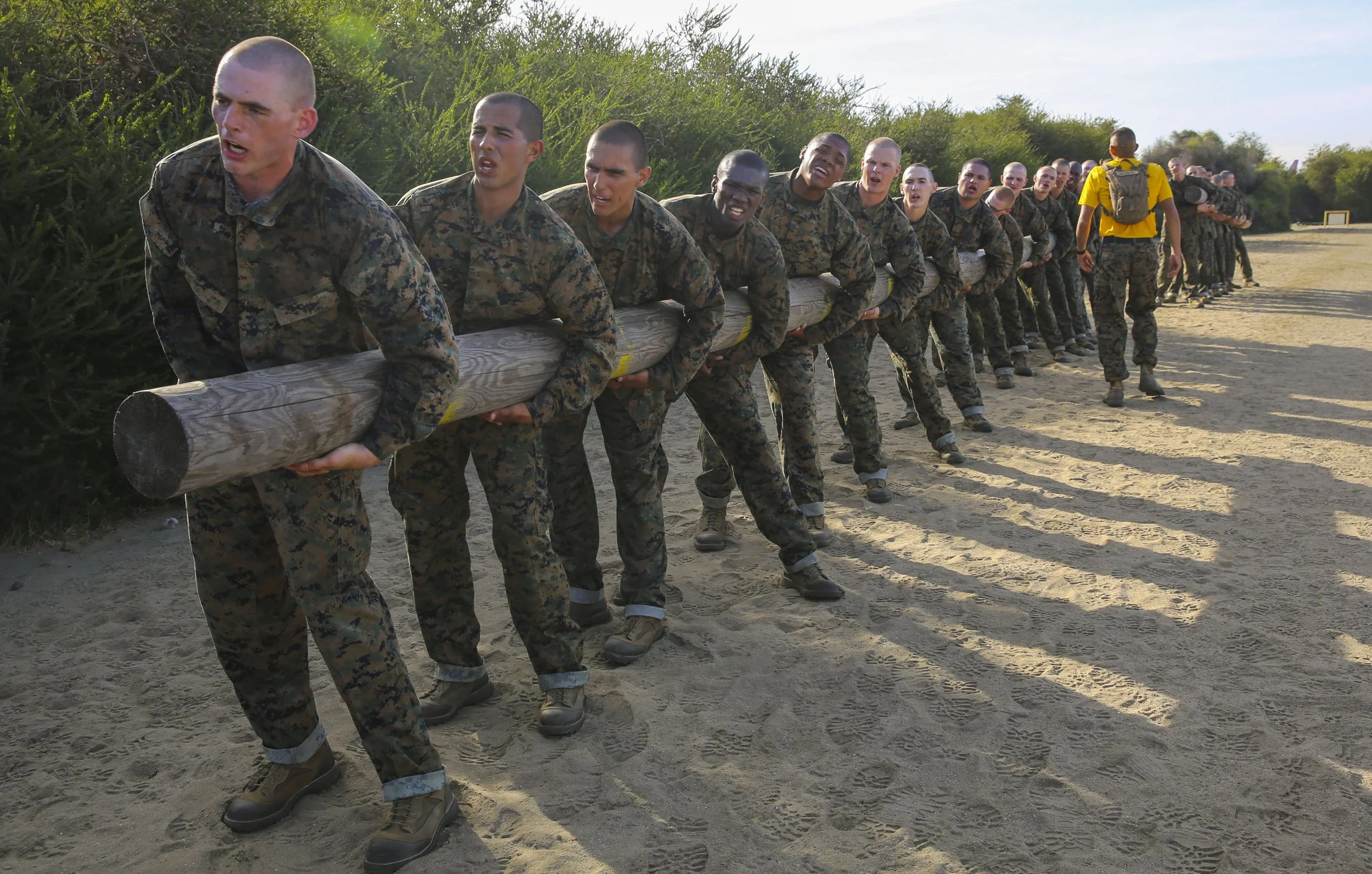
Photo Cred: mcrdsd.marines.com
Key Takeaways:
The Laboratory: Special Operations selection (like BUD/S) is less about physical fitness and more about psychological screening under extreme stress.
The 40% Rule: The brain's "Central Governor" tells you to quit when you still have 60% of your physical capacity left. Peer competition is the key to overriding this mechanism.
Stress Inoculation: By introducing competition into high-stress environments, the military "vaccinates" soldiers against panic.
The Science of Arousal: Learn how to balance dopamine and adrenaline using the Yerkes-Dodson law to prevent choking under pressure.
If you look at the physical standards required to enter elite military training—whether it’s the Navy SEALs, the Army Rangers, or the British SAS—they are surprisingly attainable for a well-conditioned athlete. A fast three-mile run, a high number of pull-ups, and a solid swim time will get you a ticket to the show.
Yet, the attrition rates for these programs consistently hover between 70% and 80%.
Why do elite, Division I athletes regularly ring the bell and quit, while average-looking farm kids make it through? The answer lies in the architecture of the human mind. Military selection is not a fitness test; it is a psychological laboratory. And the primary chemical catalyst they use to test the subjects is competition.
Here is the science of why competing against your peers under extreme duress shatters your perceived limits, and how you can use this "Crucible Mindset" to redefine your own potential.
The Chemistry of the "Dogfight"
When you are working out alone, your brain evaluates fatigue based on internal signals: heart rate, muscle acidity, and core temperature. When these get too high, your brain sends a signal: Stop.
But when you introduce an opponent, the entire neurochemical landscape shifts.
Competition triggers the release of catecholamines—specifically adrenaline and noradrenaline. This triggers your Sympathetic Nervous System (the fight-or-flight response). Simultaneously, the desire to win (and the fear of losing status in the tribe) floods the brain with dopamine, the neurotransmitter responsible for motivation and reward pursuit.
This chemical cocktail acts as a powerful analgesic (painkiller). It masks the burning in your lungs and the lactic acid in your muscles, allowing you to sustain outputs that would be biologically impossible in a solo environment.
Stress Inoculation Training (SIT)
The military doesn't just want soldiers who are brave; they want soldiers who can think clearly while being shot at. To train this, they use Stress Inoculation Training (SIT).
Think of SIT like a vaccine. A vaccine gives you a micro-dose of a virus so your immune system can build antibodies. SIT gives you a micro-dose of panic so your brain can build psychological resilience.
Instructors induce exhaustion, cold, and sleep deprivation. Then, they force the recruits to compete—racing boats, wrestling, or navigating obstacle courses.
The Mechanism: By forcing the brain to perform complex cognitive tasks (strategy, teamwork, winning) while drowning in cortisol, the recruits learn to decouple the feeling of panic from the action of performing. They learn to be comfortable in the physiological state of terror.
The "Central Governor" and the 40% Rule
In sports science, there is a concept called the Central Governor Model, popularized by Dr. Tim Noakes. It suggests that muscle fatigue is not a physical failure of the muscle, but a protective emotion generated by the brain to prevent catastrophic damage.
Navy SEALs famously refer to this as the "40% Rule"—when your mind tells you that you are completely done, you are actually only at 40% of your maximum physical capacity.
How Competition Hacks the Governor:
If you are running on a treadmill alone and your governor tells you to quit, you usually do. But if you are in a military "Crucible" event, and you see the person next to you—who is just as cold, wet, and tired as you are—take another step, it provides irrefutable proof to your brain that survival is still possible.
The visual cue of a peer succeeding overrides the Central Governor. It recalibrates your baseline of what is physically possible, forcing your brain to unlock the remaining 60% of your capacity.

The Dark Side – Why People Choke
If competition is a performance enhancer, why do some people freeze up or perform worse when competing?
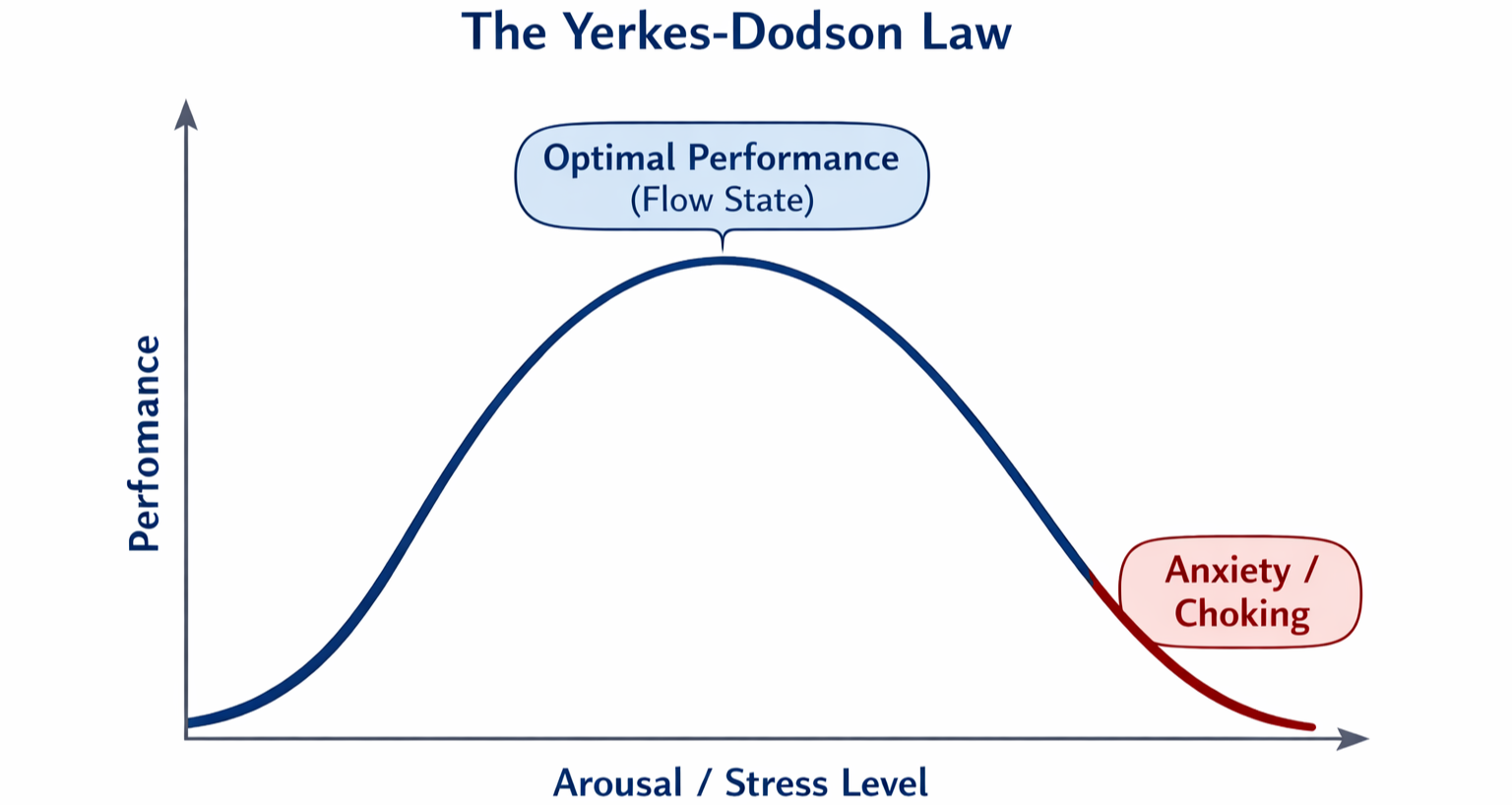
The answer lies in the Yerkes-Dodson Law, a psychological principle dictating the empirical relationship between arousal and performance.
The law states that performance increases with physiological or mental arousal, but only up to a point.
Too little stress (boredom): Performance is low.
Optimal stress (Flow State): The perfect balance of adrenaline and focus. You are in the zone.
Too much stress (Anxiety): Cognitive overload occurs. The prefrontal cortex (the logical brain) shuts down, and the amygdala (the fear center) takes over. This is what we call "choking."
Military training is designed to push recruits past the optimal peak into the anxiety zone, specifically to teach them how to consciously breathe and down-regulate their nervous system back to the sweet spot. Those who cannot regulate their own arousal are weeded out.
Applying the Crucible to Your Fitness
You do not need to enlist in the military to utilize the psychology of competition. You can weaponize these concepts in your own training to break through plateaus.
Gamify Your Suffering: Make fitness fun, Download the Athalon Fitness App on the Appstore. Join like minded competitive individuals and compete on global leaderboard.
Find a "Rival": Train with someone slightly better than you. The biological drive to close the status gap will automatically increase your motor unit recruitment.
Manufacture Adversity: Expose yourself to controlled, uncomfortable environments. Train early in the morning, in the cold, or in the rain. Building tolerance to environmental stress expands your comfort zone, keeping your arousal levels manageable when real-life stress hits.
Conclusion: The Mind Leads, the Body Follows
The ultimate lesson of military psychology is that the body is simply a machine; the mind is the operator.
Competition is not about defeating the person next to you. It is a mirror that forces you to look at your own self-imposed limitations. When the stress peaks and the desire to quit is overwhelming, the presence of an opponent strips away your excuses. It demands an answer to a single, defining question: How bad do you really want it?
Frequently Asked Questions (FAQ)
Q: What is the 40% rule in psychology? A: Popularized by Navy SEALs and endurance athletes, the 40% rule proposes that when your mind tells you you're completely exhausted and cannot take another step, your body still has roughly 60% of its physical reserves left.
Q: Does competition increase testosterone? A: Yes. Studies in sports endocrinology show that competing against an opponent can trigger short-term spikes in testosterone and cortisol, readying the body for physical exertion and dominance behaviors.
Q: How do I stop getting nervous before a competition? A: You don't want to stop the nerves; you want to reframe them. The physical sensations of anxiety (sweating, fast heart rate, butterflies) are identical to the sensations of excitement. Elite athletes train to interpret this physiological arousal as their body "powering up" rather than breaking down.
Works Cited
Noakes, T. D. (2012). Fatigue is a brain-derived emotion that regulates the exercise behavior to ensure the protection of whole body homeostasis. Frontiers in Physiology, 3, 82. https://doi.org/10.3389/fphys.2012.00082
Meichenbaum, D. (2007). Stress Inoculation Training: A preventative and treatment approach. Principles and Practice of Stress Management, 3, 497-518.
Yerkes, R. M., & Dodson, J. D. (1908). The relation of strength of stimulus to rapidity of habit-formation. Journal of Comparative Neurology and Psychology, 18(5), 459-482.
Salvador, A. (2005). Coping with competitive situations in humans. Neuroscience & Biobehavioral Reviews, 29(1), 195-205.
Morgan, W. P., et al. (1989). Psychological characterization of the elite distance runner. Annals of the New York Academy of Sciences.
Suggested Tags
#MentalToughness #MilitaryTraining #PsychologyOfCompetition #NavySEALs #CentralGovernor #YerkesDodson #StressInoculation #FlowState #TacticalFitness #DavidGoggins #MindsetShift #Biohacking
Would you like me to generate some social media captions (for Instagram or LinkedIn) to help promote this post and drive traffic?
