Why Walking Backwards Is the Ultimate Painkiller
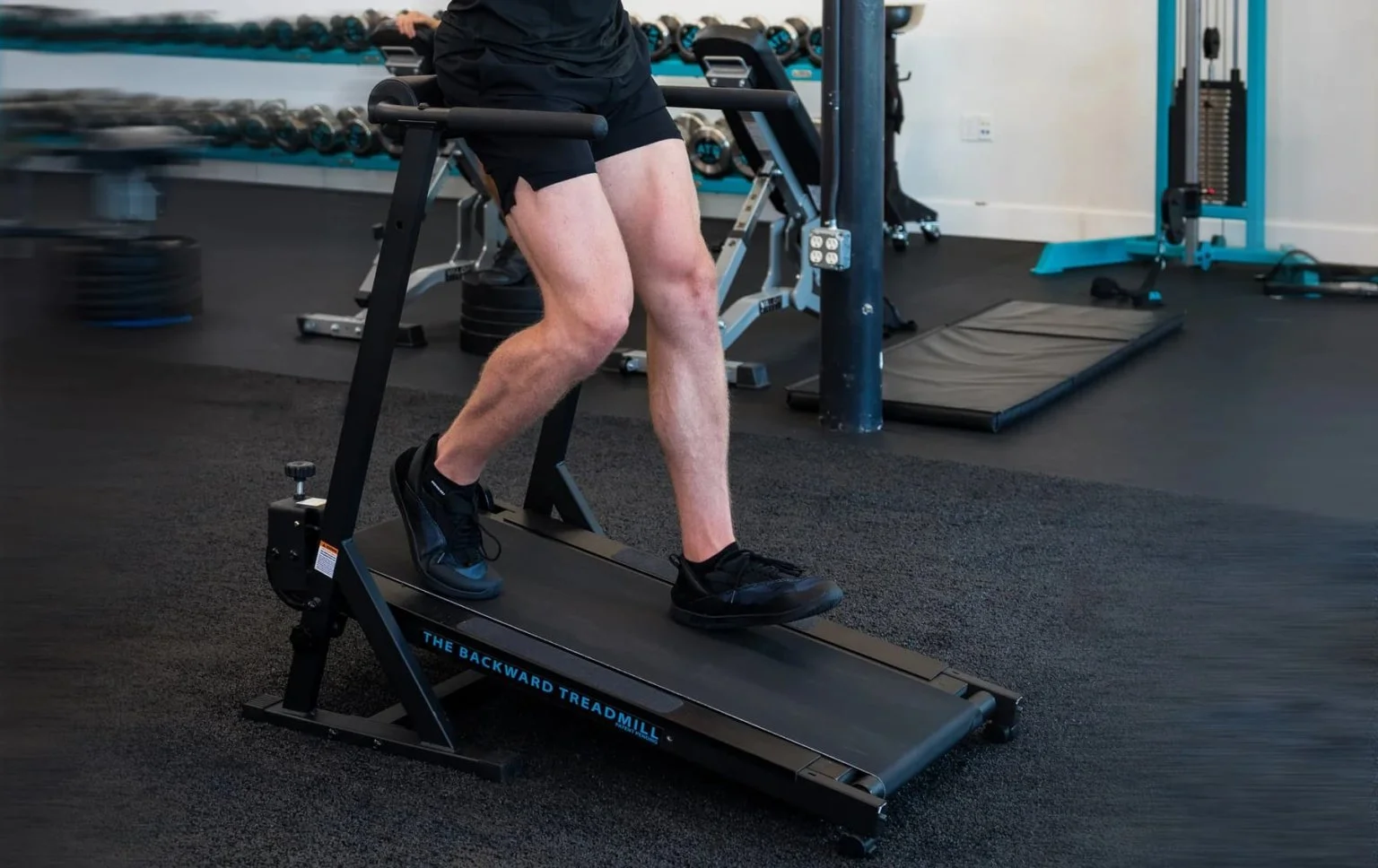
photo credit: atgequipment.com
Key Takeaways:
The Problem: Modern humans only move forward. This overdevelops the "accelerator" muscles (quads/calves) and neglects the "brakes" (knees/shins).
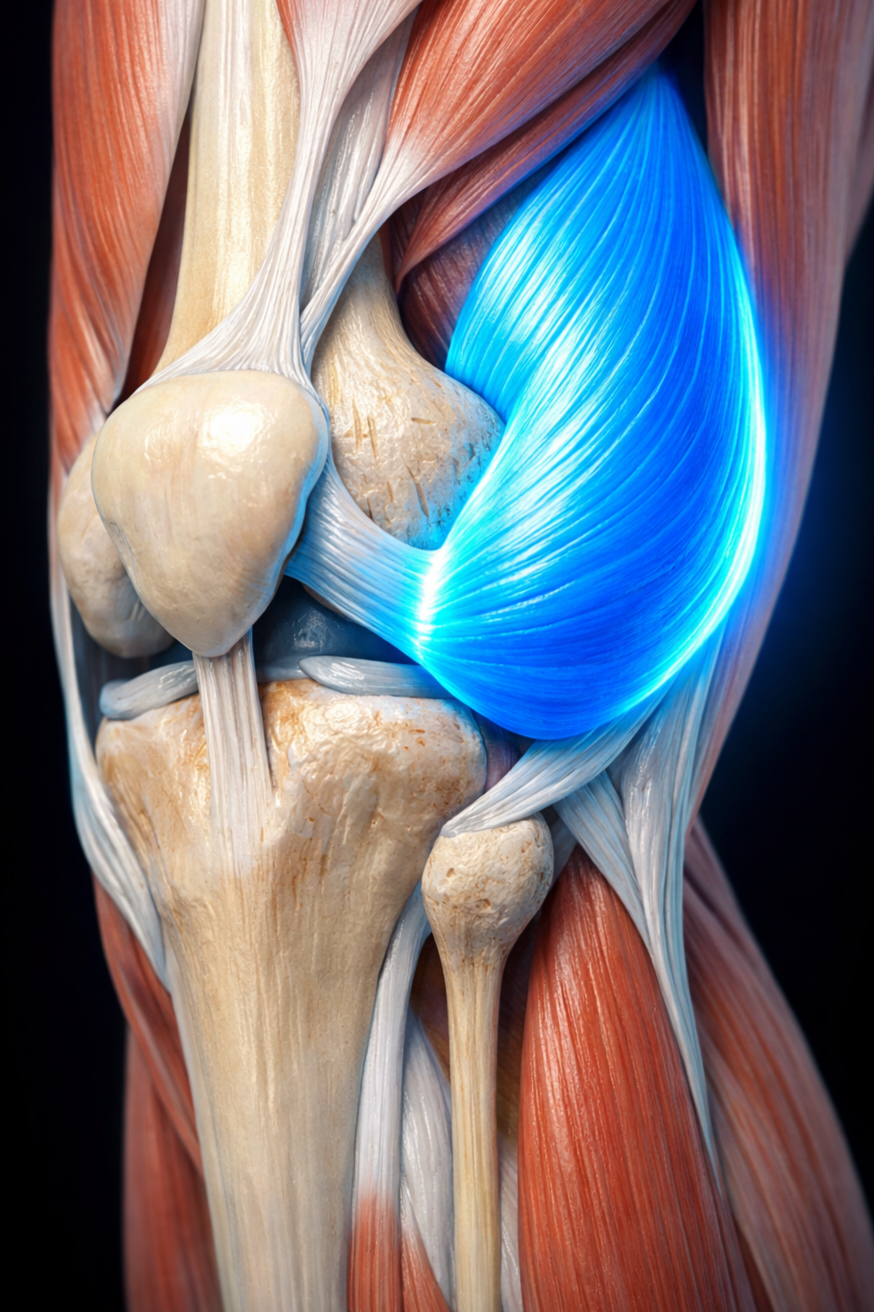
The Muscle: Reverse walking isolates the VMO (Vastus Medialis Oblique)—the "teardrop" muscle that stabilizes the knee cap.
The Benefit: It increases blood flow to the avascular (no blood supply) tendons of the knee without the impact of running.
The Fix: Just 5–10 minutes of backward walking a day can drastically reduce patellar tendonitis and "runner's knee."
If you walk into a modern gym, you might see something strange: people walking backwards on treadmills that are turned off. It looks ridiculous. It looks like they don't know how the machine works.
But these people aren't confused. They are practicing one of the most effective, science-backed protocols for joint longevity in existence.
They are Retro-Walking.
For decades, we were told that to fix knee pain, we should "rest and ice" or stop squatting. But new research (and the viral success of the "Knees Over Toes" methodology) suggests the opposite: The way to fix the knee is to load it—but in reverse.
The Anatomy of Injury: The "Deceleration" Deficit
Why do knees blow out? It rarely happens when you are standing still. It happens when you stop.
Most athletic injuries (ACL tears, meniscus issues) occur during deceleration—landing a jump, cutting direction, or stopping quickly.
The problem is that 99% of our life is spent moving forward (acceleration). We build massive engines (glutes and quads) to push us, but we have weak brakes. When you walk backward, you flip the biomechanics. You force your body to engage the tibialis anterior (shin muscle) and the structural tissues around the knee to pull you through space. You are training your brakes.
Meet the VMO: Your Knee's Bodyguard
The star of the show is the Vastus Medialis Oblique (VMO). This is the teardrop-shaped muscle on the inner part of your thigh, just above the knee.
Why it matters: The VMO is the primary stabilizer of the patella (kneecap). If it is weak, your kneecap doesn't track smoothly; it grinds. This is the cause of Patellofemoral Pain Syndrome (Runner's Knee).
The Catch: The VMO is notoriously hard to activate. Standard squats and lunges often skip right over it, recruiting the outer quad instead.
The Solution: Reverse walking is one of the few movements that isolates the VMO. Because your toe hits the ground first (instead of the heel), the knee is forced to stabilize the load instantly, firing the VMO with every step.
The "Deadmill" Protocol: How to Start
You don't need fancy equipment. You just need a hill or a treadmill.
Level 1: The Flat Ground Retro (The Warmup)
Where: A hallway, driveway, or open field.
How: Simply walk backward. Focus on reaching back with your toe and rolling through to the heel.
Duration: 10 minutes continuously.
Feeling: You should feel a deep "burn" in your quads and shins within 2 minutes. This burn is good—it means blood is flushing into the tendons.
Level 2: The "Deadmill" (The Strength Builder)
This is the gold standard for bulletproofing.
Where: A manual treadmill (or a motorized one turned OFF).
How: Stand backward on the belt. Lean your back against the console/handles. Push the belt away from you with your feet to make it move manually.
Duration: 3 sets of 1 minute.
Why: The resistance of the belt forces you to drive through the toe, placing massive (but safe) tension on the knee tendon.
Blood Flow for the "White Tissue"
Muscles are red because they are full of blood. Tendons and ligaments are white because they have almost no blood supply. This is why a muscle heals in days, but a tendonitis lingers for months.
Walking backwards acts as a nutrient pump. The rhythmic compression of the knee joint sucks synovial fluid and blood into these "white tissues," delivering the collagen and oxygen they need to repair. It is practically the only way to "feed" a knee tendon without the impact of jumping.
Conclusion: Use It or Lose It
We accept knee pain as a "normal" part of aging. We say, "Oh, I have bad knees, I can't run."
But biology suggests that your knees aren't "bad"—they are just neglected. They are over-accelerated and under-decelerated. By simply reversing your direction for 10 minutes a day, you can reverse the age of your joints.
Don't just move forward. Sometimes, the only way to progress is to go backward.
Frequently Asked Questions (FAQ)
Q: Is walking backwards safe for seniors? A: Yes, but start on flat ground with a wall or handrail nearby for balance. It is actually excellent for seniors because it improves proprioception (balance awareness), reducing the risk of falls.
Q: Can I do this on an elliptical? A: Yes! Going backward on an elliptical is a great low-impact alternative. However, the "Deadmill" (pushing a heavy belt) provides better resistance for strength gains.
Q: How often should I do this? A: You can do Level 1 (flat ground) every single day as a warmup. It is low stress. Save the heavy resistance (Deadmill) for 2–3 times a week as a leg workout finisher.
Works Cited
Roos, P. E., et al. (2012). Muscle activity and joint loading during backward walking. Journal of Biomechanics, 45(11), 1958-1963.
Flynn, T. W., & Soutas-Little, R. W. (1993). Patellofemoral joint compressive forces in forward and backward running. Journal of Orthopaedic & Sports Physical Therapy, 17(1), 24-32.
Cipriani, D. J., et al. (2003). A comparison of anterior and posterior muscular activities during backward walking and forward walking. Journal of Orthopaedic & Sports Physical Therapy.
Threlkeld, A. J., et al. (1989). Kinematics, ground reaction force, and muscle balance produced by backward running. Journal of Orthopaedic & Sports Physical Therapy.
Cha, H. G., et al. (2016). Therapeutic efficacy of walking backward and forward on a treadmill in patients with knee osteoarthritis. Journal of Physical Therapy Science.
