The Ape's Secret: Why Hanging From a Bar is the Ultimate Cure for Shoulder Pain

Key Takeaways:
The Epidemic: Modern posture (hunched over phones and keyboards) literally shrinks the space inside your shoulder joint, crushing your rotator cuff.
The Flawed Fix: Standard physical therapy often prescribes light band exercises, which strengthen the muscle but don't fix the structural crowding of the bone.
The Antidote: "Brachiating" (hanging from your hands) uses gravity to stretch the ligaments, decompress the spine, and actually reshape the bones of the shoulder over time.
The Protocol: Hanging for just 1 to 3 minutes a day can reverse decades of postural damage and prevent rotator cuff surgery.
If you have ever dealt with a "tweaky" shoulder, a torn rotator cuff, or a sharp pain when lifting your arm overhead, you are not alone. Shoulder pain is a modern epidemic.
Usually, the medical advice is predictable: stop lifting heavy things, take ibuprofen, and do endless, boring internal/external rotation exercises with a rubber band.
But what if the solution to your shoulder pain isn't a rubber band? What if the solution is simply acting a little more like our evolutionary ancestors?
A growing movement in orthopedic biomechanics, pioneered by surgeons like the late Dr. John Kirsch, suggests that the cure to shoulder pain is remarkably simple: You just need to hang from a bar.
The Anatomy of a Pinch: Why Your Shoulder Hurts
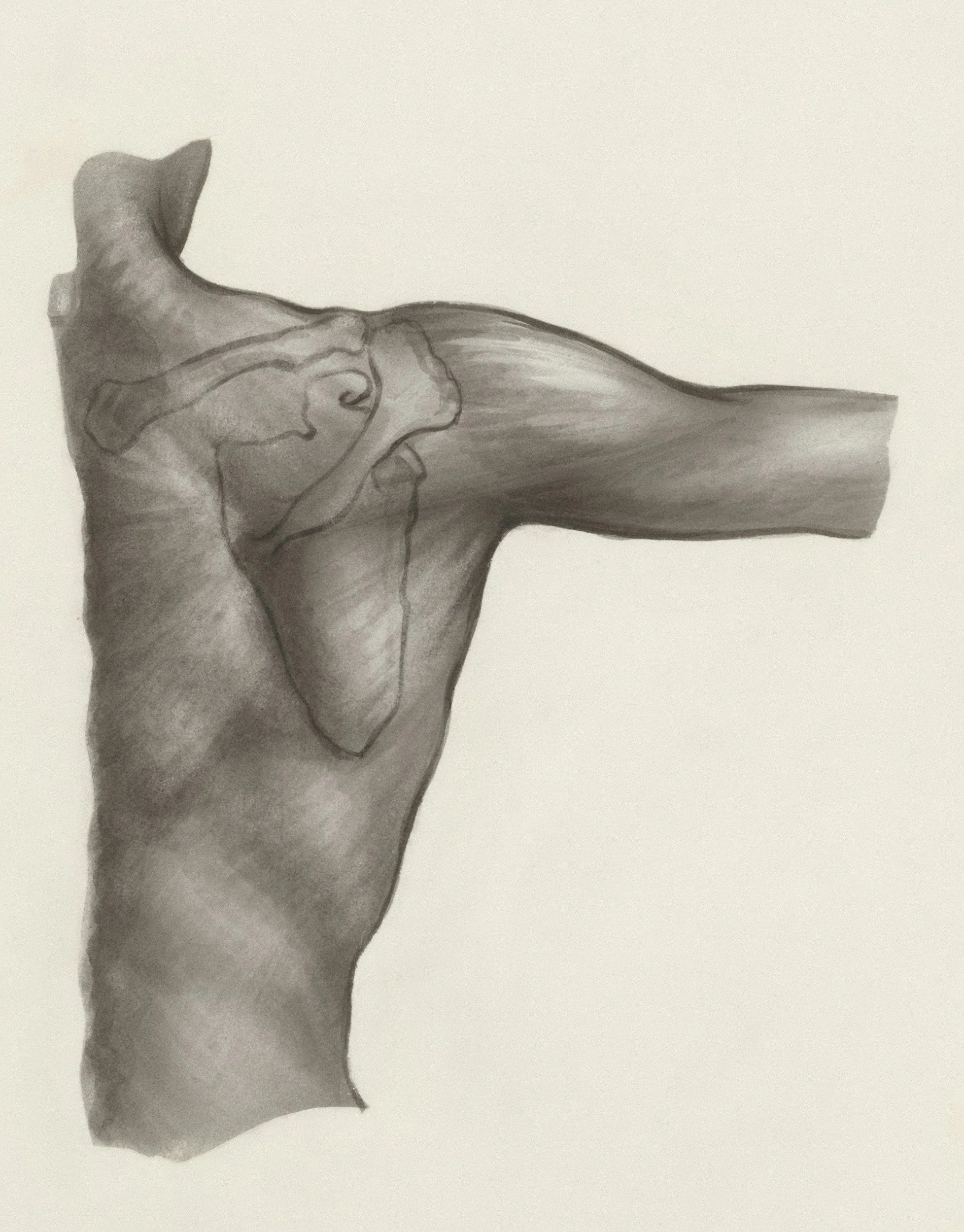
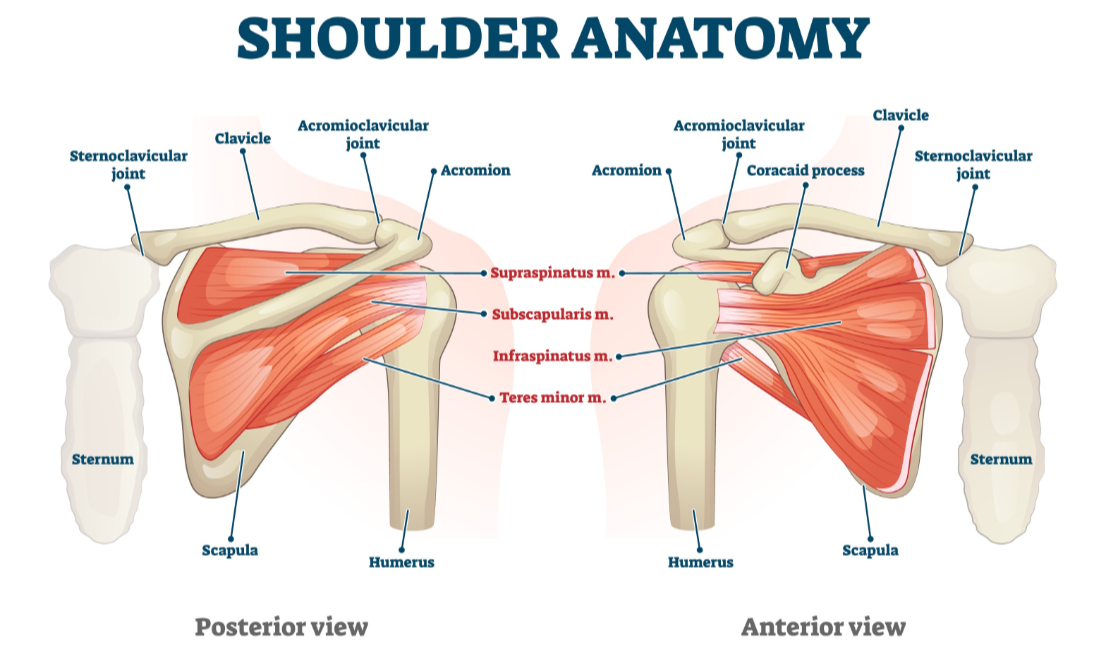
To understand why hanging works, you have to understand why your shoulder is hurting in the first place. Your shoulder is a ball-and-socket joint, but the "socket" is actually quite shallow. Sitting directly above the ball of your humerus (arm bone) is a bony roof called the acromion.
The space between the arm bone and this bony roof is called the subacromial space. Crucial tendons—specifically your supraspinatus (a key rotator cuff muscle)—run directly through this tiny gap.
The Modern Problem: Because we spend 90% of our lives with our arms down and our shoulders hunched forward over steering wheels and laptops, that bony roof (the acromion) actually curves downward over time. The subacromial space shrinks.
When you finally try to reach overhead—to grab something off a shelf or do a shoulder press—the arm bone smashes the rotator cuff tendon into the bony roof. This is called Shoulder Impingement Syndrome. It frays the tendon like a rope rubbing against a sharp rock.
The Surgeon's Hack: How Hanging Reshapes Bone
Dr. John Kirsch, a board-certified orthopedic surgeon, suffered from severe shoulder pain. Facing his own scalpel, he decided to look at human evolution.
Humans evolved from primates that spent millions of years brachiating (swinging from branch to branch). Our shoulders are literally engineered to bear our body weight from above.
Dr. Kirsch discovered that when you perform a relaxed "Dead Hang," the humerus bone acts like a lever. It pushes up against the coracoacromial arch (the roof of the shoulder).
Thanks to Wolff’s Law—which states that bones adapt to the stress placed upon them—the intense pressure of hanging actually forces the acromion bone to remodel and bend upward and backward.
You are literally using gravity and your own body weight to carve out more space in your shoulder joint, freeing the trapped rotator cuff tendon.
@shutterstock
The Bonus: A Vacuum for Your Spine
If bulletproofing your rotator cuffs wasn't enough, hanging provides a massive secondary benefit: structural spinal relief.
Throughout the day, gravity compresses the intervertebral discs in your spine. This is why you are actually slightly shorter at night than you are in the morning.
When you hang passively, the weight of your pelvis and legs pulls downward, creating traction. This gentle stretching opens up the vertebrae, creating a vacuum effect that pulls fluids, oxygen, and nutrients back into the discs. It is one of the most effective, natural ways to relieve lower back stiffness and sciatica.
The Protocol: How to Hang Properly
You don't need to be able to do a pull-up to benefit from hanging. Here is how to incorporate it into your routine:
Step 1: The Passive Hang (The Stretcher)
The Goal: Decompression and bone remodeling.
How: Grab a bar with an overhand grip. Let your body go completely limp. Let your shoulders travel all the way up to your ears. Breathe deeply into your belly.
Time: Aim for 30 to 60 seconds.
Step 2: The Active Hang (The Stabilizer)
The Goal: Strengthening the lower trapezius and latissimus dorsi to keep the shoulder blades locked in a healthy position.
How: From the passive hang, pull your shoulder blades down and back (away from your ears) without bending your elbows. Your chest will rise slightly.
Time: Hold for 10–20 seconds, then relax back into a passive hang.
The "Too Heavy" Modification:
If you lack the grip strength or have a very high body weight, do not jump straight into a full hang. Use a box to keep your feet lightly touching the ground. Bend your knees to let 50% or 70% of your body weight pull on your arms, using your legs to support the rest.
Conclusion: Reclaim Your Gravity
We spend our days fighting gravity from a seated position, and our joints are paying the price.
Sometimes, the best way to heal the body is to stop fighting and simply surrender to gravity. By adding a 90-second hang to the end of your workouts or your morning routine, you can reshape your bones, hydrate your spine, and ensure your shoulders function the way nature intended.
Find a bar. Grab on. And just hang.
Frequently Asked Questions (FAQ)
Q: Should I hang if my shoulder is currently dislocated or unstable? A: No. If you have a history of anterior shoulder dislocations or multidirectional instability (hypermobility), passive hanging can exacerbate the issue. You should consult a physical therapist and focus on Active hangs to build stability first.
Q: Does hanging build grip strength? A: Yes, incredibly well. Your grip strength is a major indicator of overall longevity and central nervous system health. Hanging daily will drastically improve your forearms and your ability to deadlift or carry heavy objects.
Q: Will this fix my posture? A: Hanging stretches the pectoralis minor and the lats, two muscles that notoriously pull the shoulders forward into a "slouched" posture when tight. Stretching them under load is excellent for restoring an upright posture.
Works Cited
Kirsch, J. M. (2013). Shoulder Pain? The Solution & Prevention. BookSurge Publishing.
Neer, C. S. (1983). Impingement lesions. Clinical Orthopaedics and Related Research, (173), 70-77.
Seitz, A. L., et al. (2011). Mechanisms of rotator cuff tendinopathy: intrinsic, extrinsic, or both?. Clinical Biomechanics, 26(1), 1-12. https://doi.org/10.1016/j.clinbiomech.2010.08.001
Kuo, Y. L., et al. (2013). Sagittal spinal posture after Pilates-based exercise in healthy older adults. Spine, 34(10), 1046-1051.
Martin, R. M., & Martin, D. (2006). The physics of brachiating in apes and humans. Journal of Experimental Biology.
