Why Wall Sits Beat Cardio for Lowering Blood Pressure
Key Takeaways:
The Myth: For decades, doctors have prescribed aerobic cardio (running, cycling) as the gold standard for lowering high blood pressure.
The Breakthrough: A monumental 2023 study analyzing over 15,000 participants found that Isometric Exercise (holding a static position) is actually the most effective way to lower resting blood pressure.
The Mechanism: Holding a wall sit creates a "tourniquet effect" in the legs. When you stand up, a massive rush of blood forces your arteries to release Nitric Oxide, widening the blood vessels.
The Protocol: Just 14 minutes a day, three times a week, is enough to create significant clinical changes in cardiovascular health.
If you go to the doctor with high blood pressure, the prescription is almost always the same: eat less salt, take this pill, and start jogging.
For 40 years, aerobic exercise has been the undisputed king of cardiovascular health. We were told that to fix the heart, we had to get the heart rate up. We had to move.
But a groundbreaking review published in the British Journal of Sports Medicine recently sent shockwaves through the fitness and medical communities. After analyzing 270 clinical trials involving nearly 16,000 people, researchers discovered that cardio is not the most effective way to lower blood pressure.
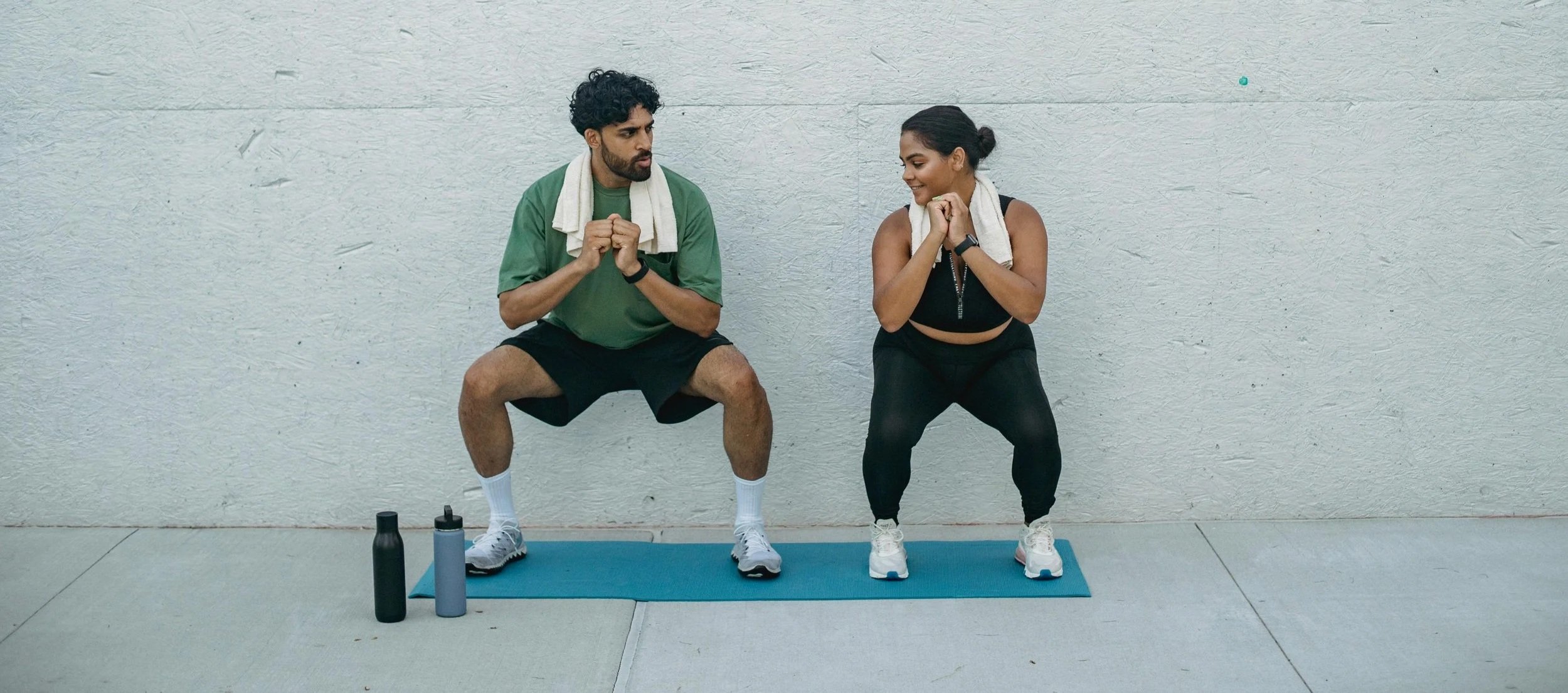
The undisputed winner requires zero movement, zero equipment, and zero running shoes. It is the exercise you dreaded most in middle school gym class: The Wall Sit.
Here is the fascinating science of how "Isometric" training hacks your vascular system, and how 14 minutes can change your heart health.
What Are Isometric Exercises?
Most exercises are dynamic. When you do a bicep curl or a squat, the muscle changes length. It stretches (eccentric) and shortens (concentric).
Isometric exercise is completely static. You contract the muscle and hold it in one position without moving the joint. Think of a plank, a glute bridge hold, or a wall sit.
Because you aren't moving, your heart rate doesn't spike the way it does during a sprint. So, how does it lower blood pressure better than cardio? It all comes down to the plumbing.
The "Tourniquet Effect" and Nitric Oxide
When you lower yourself into a wall sit, the massive muscles in your legs (the quadriceps and glutes) contract and stay contracted.
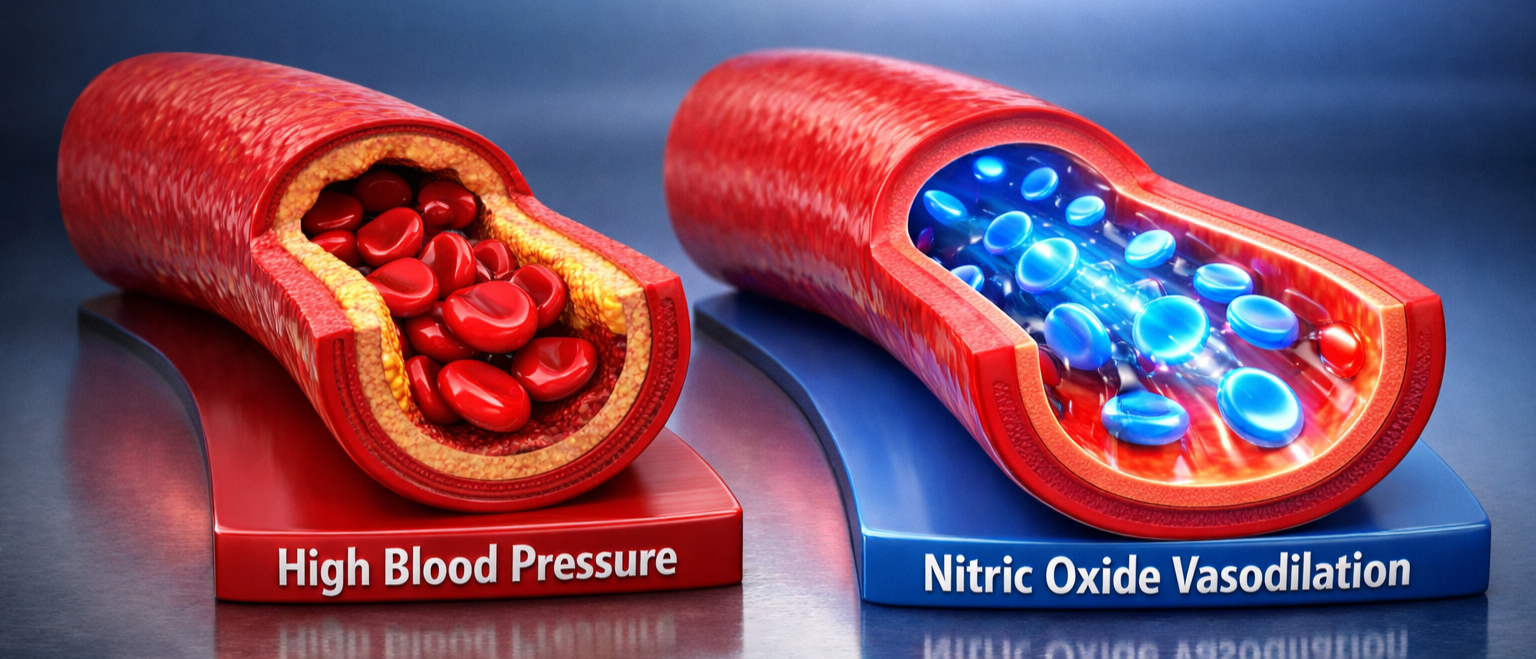
This sustained tension physically squeezes the blood vessels inside your legs. It acts like a temporary, biological tourniquet, restricting the flow of blood and causing a localized drop in oxygen within the muscle.
The Magic Happens When You Stand Up: The moment you release the wall sit and stand up, the "tourniquet" is removed. A massive, high-pressure surge of fresh blood rushes back into the legs. This sudden rush of blood creates physical friction (called "shear stress") against the inner lining of your blood vessels (the endothelium). This friction forces the blood vessels to release a miracle molecule called Nitric Oxide (NO).
Nitric Oxide is a potent vasodilator. It tells your blood vessels to relax and widen. Over time, regularly triggering this Nitric Oxide flush trains your arteries to remain wider and more pliable, drastically reducing the pressure required for your heart to pump blood through them.
The Numbers: Wall Sits vs. Cardio
The 2023 BJSM study compared different types of exercise and their impact on systolic and diastolic blood pressure. The results were definitive.
Here is how much each exercise lowered systolic blood pressure:
Walking/Running: -4.08 mmHg
Weightlifting: -4.55 mmHg
HIIT (Intervals): -4.08 mmHg
Isometric Exercise (Wall Sits):-8.24 mmHg
Isometric training was literally twice as effective as traditional cardio. For many people, an 8-point drop in systolic blood pressure is the equivalent of taking a low-dose antihypertensive medication.
The 14-Minute Wall Sit Protocol
You do not need to hold a wall sit for an hour to get these benefits. The clinical protocol is incredibly short, making it the ultimate biological hack for busy professionals.
The Routine (3 Days a Week):
Hold: Lower into a wall sit (thighs parallel to the floor, back flat against the wall). Hold for 2 minutes.
Rest: Stand up, shake your legs out, and rest for 2 minutes. (This is when the Nitric Oxide rush happens).
Repeat: Complete a total of 4 sets.
Total time: 14 minutes.
Note: The 2-minute hold will burn. If you cannot hold it for 2 minutes initially, don't drop lower than a 45-degree angle. Build up your tolerance over a few weeks until you can hit the 90-degree mark.
Conclusion: Work Smarter, Not Harder
Aerobic exercise is still vital for VO2 Max, mental health, and overall longevity. You shouldn't stop walking or running. But if your specific goal is to lower your blood pressure, science has given us a massive shortcut. We have spent years trying to sweat our way out of cardiovascular disease, ignoring the incredible power of static tension.
The next time you have 15 minutes to spare while watching TV or taking a break at the office, find a wall. Your heart will thank you.
Frequently Asked Questions (FAQ)
Q: Do planks have the same blood pressure benefits as wall sits? A: Yes, planks are also isometric exercises and were included in the study. However, wall sits were found to be slightly more effective, likely because the quadriceps are the largest muscle group in the body, creating a larger "tourniquet effect" and a greater Nitric Oxide release upon standing.
Q: Is it safe to do isometric exercises if my blood pressure is currently very high? A: During the actual 2-minute hold, your blood pressure will temporarily rise (this is normal). If you have severe, unmanaged hypertension (Stage 2 or higher), you should always get medical clearance from your cardiologist before starting any new exercise routine, including isometrics.
Q: Can wall sits help with knee pain? A: Absolutely. Isometric holds are the gold standard in physical therapy for treating patellar tendonitis (runner's knee). Because there is no movement, it safely loads the knee tendon without grinding the joint, acting as a powerful painkiller for the knees.
Works Cited
Edwards, J. J., Deenmamode, A. H., Griffiths, M., et al. (2023). Exercise training and resting blood pressure: a large-scale pairwise and network meta-analysis of randomised controlled trials. British Journal of Sports Medicine, 57(20), 1317-1326.
Green, D. J., & Smith, K. J. (2018). Effects of Exercise on Vascular Function, Structure, and Health in Humans. Cold Spring Harbor Perspectives in Medicine, 8(4).
Millar, P. J., McGowan, C. L., Cornelissen, V. A., Araujo, C. G., & Swaine, I. L. (2014). Evidence for the role of isometric exercise training in reducing blood pressure: potential mechanisms and future directions. Sports Medicine, 44(3), 345-356.
