The Hip Flexor Paradox: Why Stretching is Making Your Hips Tighter
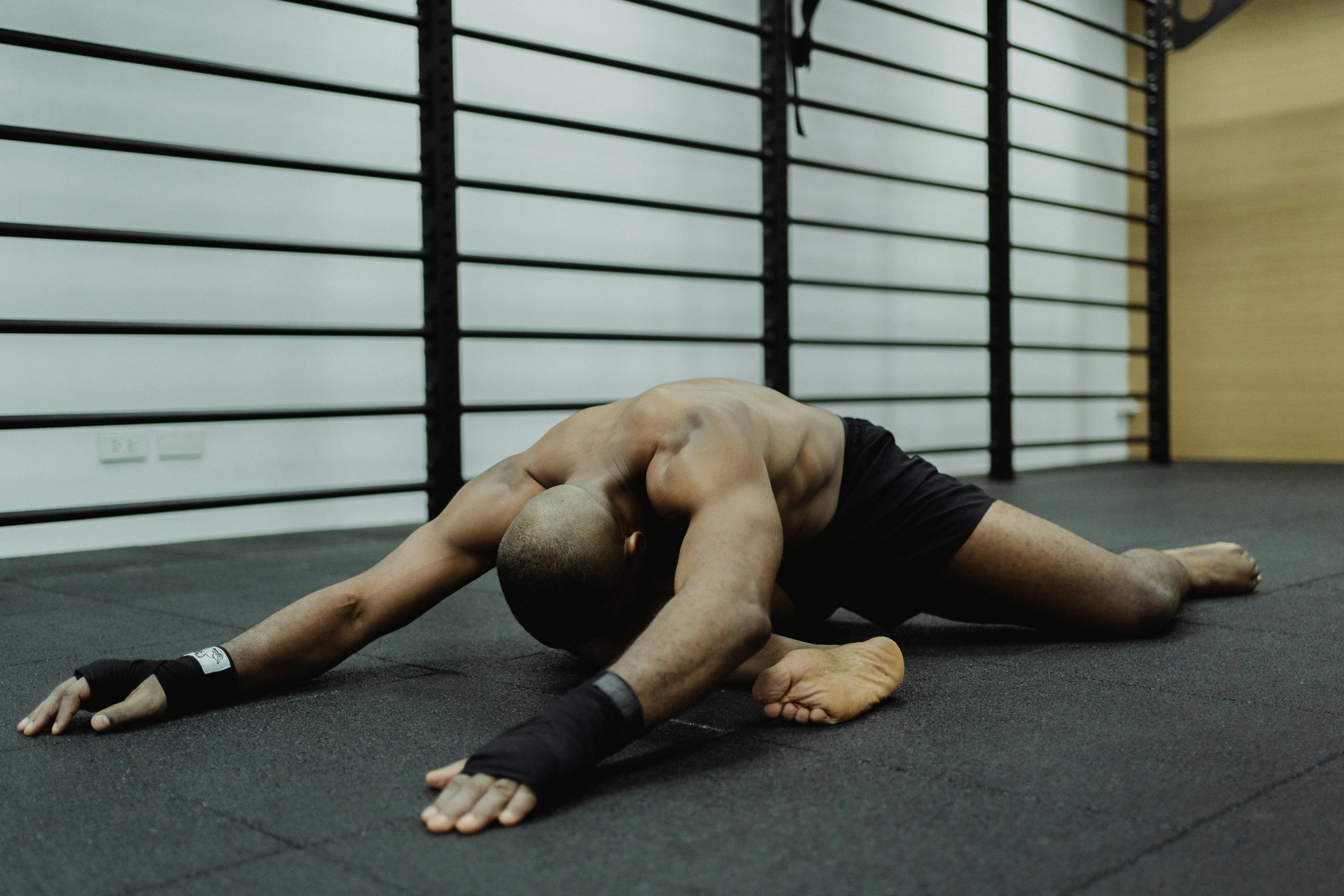
Key Takeaways:
The Sensation vs. Reality: Just because a muscle feels tight does not mean it is mechanically short. "Tightness" is often a neurological distress signal that a muscle is weak and over-lengthened.
The Culprit: The Psoas (your main hip flexor) is the only muscle that connects your spine to your legs. When it gets weak from sitting, your brain locks it down to protect your spine.
The Mistake: Aggressively stretching a weak, locked-down muscle causes micro-tears and triggers your central nervous system to tighten it even further.
The Fix: To release a "tight" hip flexor, you have to do the exact opposite of stretching: you have to load it with weight. Discover the "Psoas March."
If you sit at a desk for a living, you know the feeling. The front of your hips feels like thick, unyielding steel cables. Your lower back constantly aches.
If you ask Google, a trainer, or a physical therapist what to do, you will be told to get down on one knee and push your hips forward into a deep lunge. You are told you have "tight hip flexors," and you just need to stretch them out.
So you stretch. You do pigeon poses, you do lunges, you use foam rollers. You might feel relief for about 20 minutes, but by the end of the day, your hips are just as tight—if not tighter—than when you started.
Why? Because you are trying to solve a hardware problem with a software solution.
Modern sports science has revealed a massive flaw in how we treat joint stiffness: Your hip flexors aren't tight because they are too short. They are tight because they are incredibly weak. Here is why you need to stop stretching your hips, and start strengthening them instead.
Meet the Psoas: The Bridge Between Halves
To understand the paradox of the hip flexor, you have to meet the king of the core: the Psoas Major.
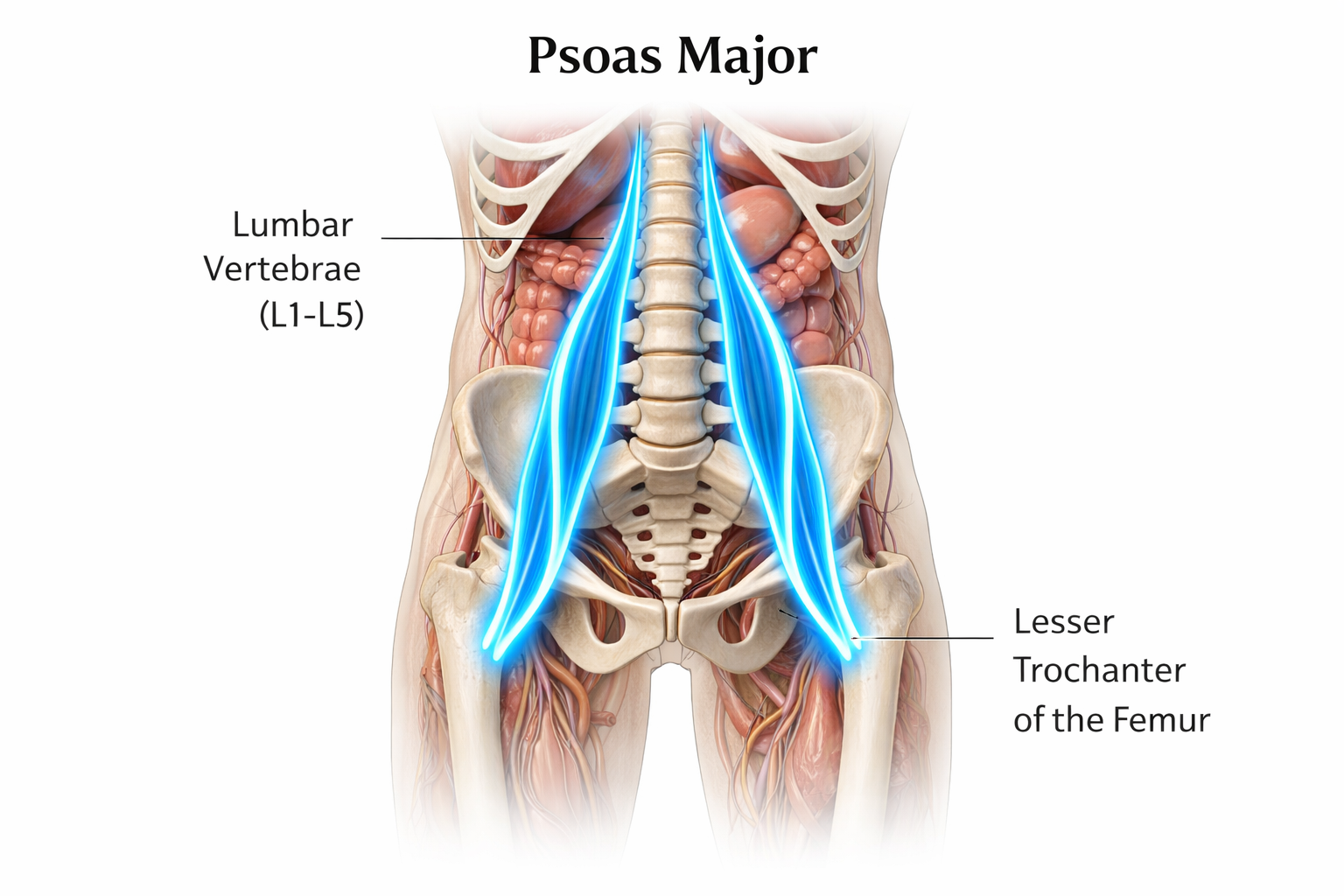
This is arguably the most important muscle in the human body for upright movement. It is the only muscle that directly connects your upper body (the lumbar spine) to your lower body (the femur).
Every time you lift your knee to walk, run, or climb stairs, the psoas does the heavy lifting. But the psoas is also a spinal stabilizer. It acts like a guy-wire, keeping your lower back upright and preventing your spine from collapsing.
The Neurological "Parking Brake"
When you sit in a chair for 8 hours a day, your psoas is held in a shortened, resting position. It doesn't have to work to lift your leg, and it doesn't have to work to stabilize your spine because the backrest of your chair is doing the job.
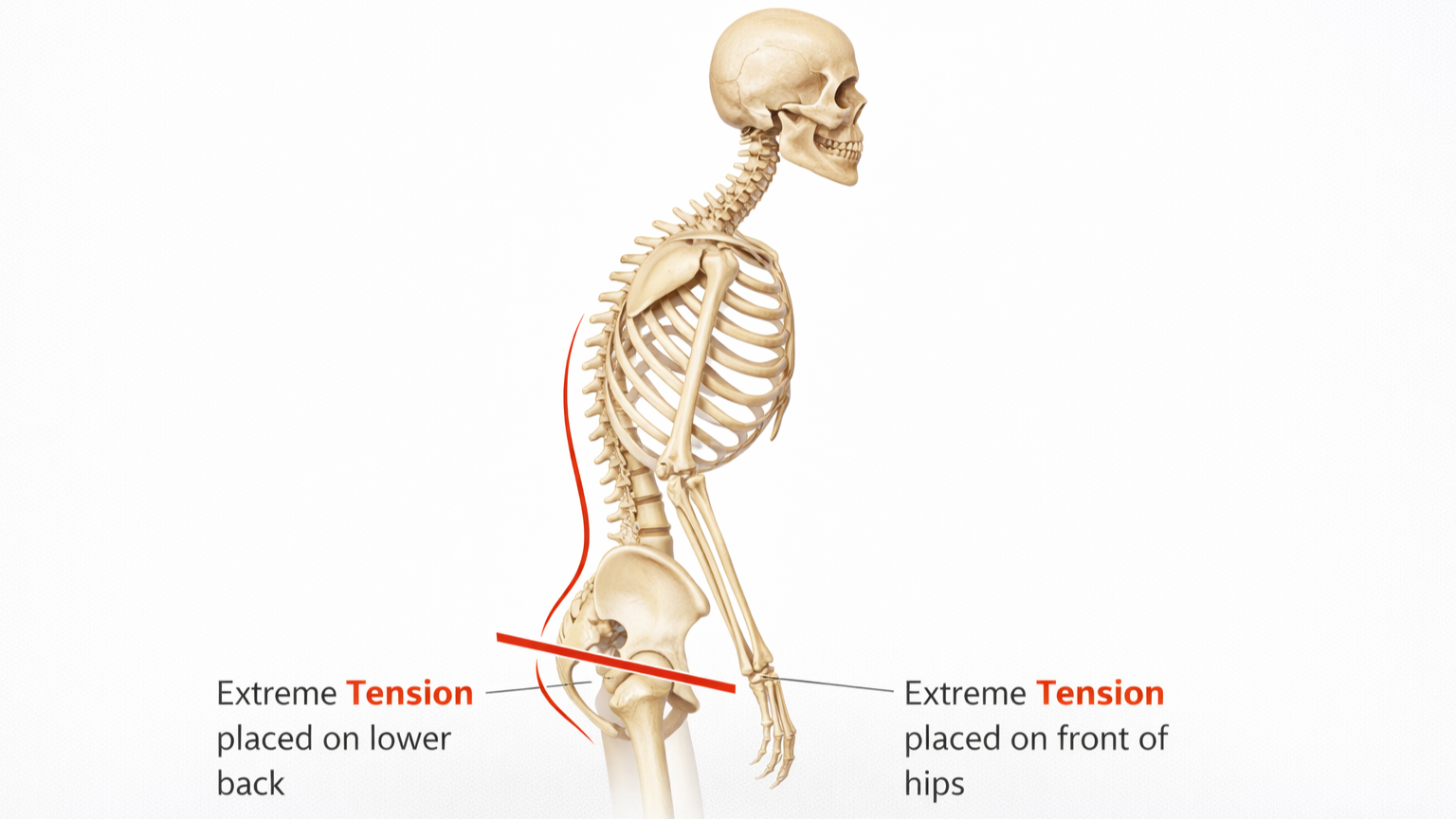
As a result, the muscle rapidly loses strength (atrophy).When you finally stand up, your pelvis tilts forward (Anterior Pelvic Tilt). This forward tilt actually pulls the weak psoas taut, stretching it out like a rubber band.
Here is where the biology kicks in. Your central nervous system senses that this vital spinal stabilizer is weak and overstretched. To prevent your spine from getting injured, the brain hits the emergency panic button. It sends a neurological signal to the psoas to "lock down" and contract.
The "tightness" you feel is not a short muscle. It is your brain applying a neurological parking brake to protect a weak muscle.
Why Stretching Makes It Worse
Imagine you are hanging off the edge of a cliff by one arm. Your arm is incredibly tense, locked up, and burning.
If someone comes along and says, "Wow, your arm looks really tight, let me stretch it for you," and pulls your arm downward, what happens? Your brain panics and forces your muscles to grip the cliff even harder to save your life.
This is exactly what happens when you do a deep lunge stretch on a weak psoas.
You are taking a muscle that is already weak and structurally vulnerable, and you are pulling it apart. You trigger the stretch reflex. The brain responds by tightening the muscle even further to prevent it from tearing.
You cannot stretch weakness out of a muscle. You have to build strength into it.
The Fix: The "Psoas March" Protocol

To convince your brain to release the parking brake, you have to prove to it that the psoas is strong enough to handle the load of your body. You do this through loaded hip flexion. By forcing the muscle to contract against resistance, you build strength, increase blood flow, and signal to the nervous system that it is safe to relax.
How to Perform the Psoas March:
The Setup: Lie flat on your back on the floor. Take a light mini-loop resistance band and wrap it around the center of both feet.
The Starting Position: Lift both feet off the ground so your knees are bent at a 90-degree angle (like you are sitting in an invisible chair in the air). Drive your lower back flat into the floor.
The Movement: Keep your left knee locked firmly in place, pulling against the band toward your chest. Slowly straighten your right leg all the way out until your heel hovers one inch above the floor.
The Squeeze: Pause for a second, then pull the right knee back to the 90-degree starting position. Alternate legs.
The Dose: Do 3 sets of 10 slow, controlled reps per leg.
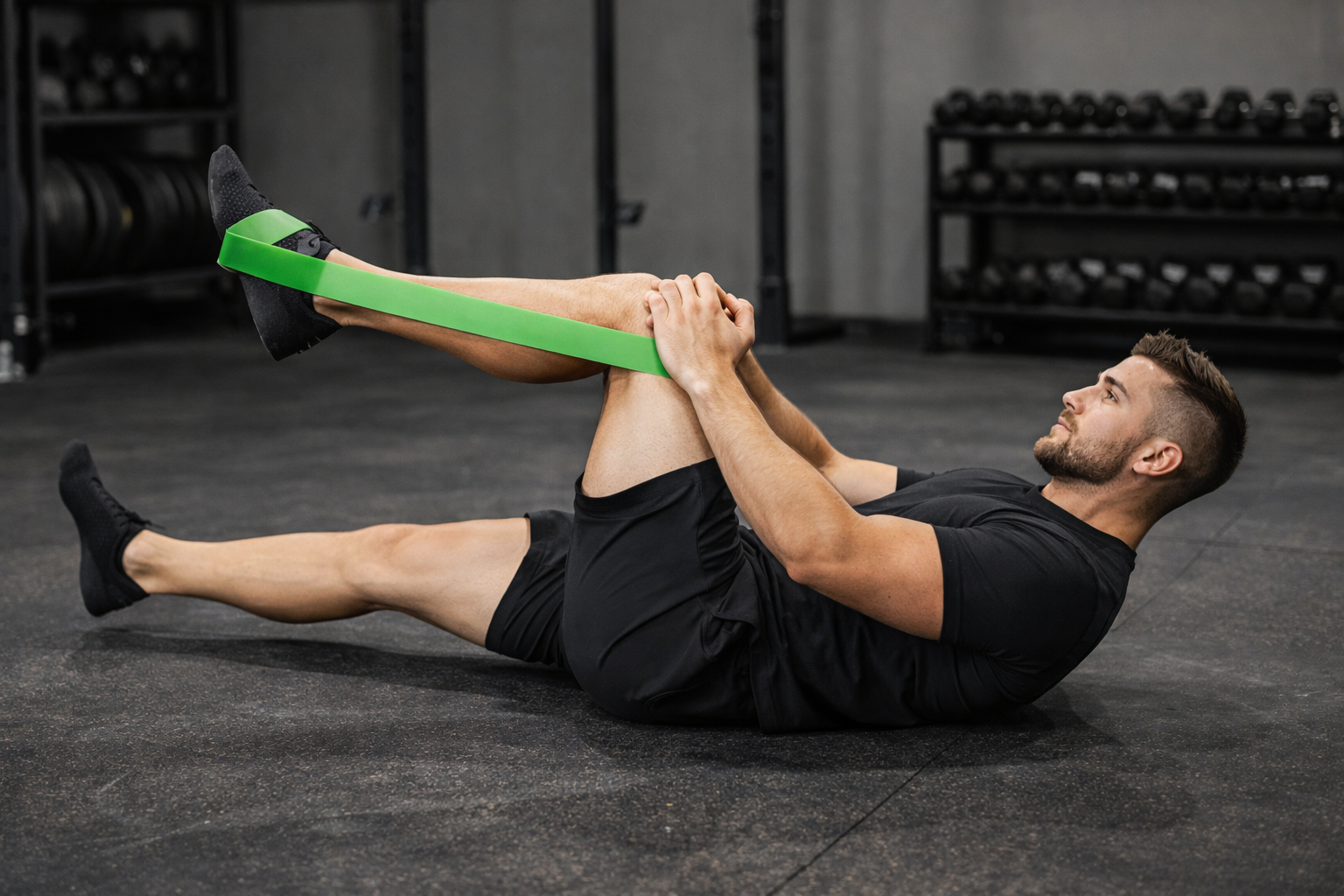
AI Generated Example
You will feel a deep, intense burn in the crease of your hip. That is your psoas finally waking up. When you stand up after this exercise, your hips will magically feel "loose" and your lower back pain will dissipate. You didn't stretch them; you activated them.
Conclusion: Re-thinking Mobility
We have been conditioned to believe that flexibility and mobility are the same thing. They are not.
Flexibility is how far a muscle can passively stretch. Mobility is how much strength and control you have in that stretched position.
Stop treating your body like a stiff piece of taffy that just needs to be pulled. Your body is a highly intelligent neurological machine. When a joint feels tight, it is usually begging for strength, not a stretch. Grab a resistance band, wake up your psoas, and take the parking brake off your hips.
Frequently Asked Questions (FAQ)
Q: Should I completely stop stretching my hip flexors? A: Not necessarily. If you enjoy the feeling of a stretch, you can still do it, but it must be active. Instead of passively sinking into a lunge and hanging on your ligaments, squeeze the glute of your trailing leg as hard as you can. This uses reciprocal inhibition (firing the opposing muscle) to safely signal the hip flexor to relax.
Q: Can a weak psoas cause knee pain? A: Yes. Because the body is a kinetic chain, if your hip flexors cannot properly lift your leg during a run or a walk, your body will compensate by overusing the quadriceps and the TFL (tensor fasciae latae). This leads to tracking issues in the kneecap and IT band syndrome.
Q: How often should I do the Psoas March? A: Because you are fighting against 8+ hours of daily sitting, you can (and should) do the Psoas March every single day. It serves as an incredible warm-up prior to squats, deadlifts, or running.
Works Cited
McGill, S. (2015). Back Mechanic: The step-by-step McGill method to fix back pain. Backfitpro Inc.
Johnston, C. A., et al. (1998). Biomechanics of the hip. Clinical Orthopaedics and Related Research, (353), 2-14.
Comerford, M. J., & Mottram, S. L. (2001). Movement and stability dysfunction–contemporary developments. Manual Therapy, 6(1), 15-26. https://doi.org/10.1054/math.2000.0388
Page, P., Frank, C. C., & Lardner, R. (2010). Assessment and treatment of muscle imbalance: the Janda approach. Human kinetics.
