How Exercise Rewires Your Brain for Happiness
Key Takeaways:
The Comparison: Research suggests exercise can be as effective as antidepressants (SSRIs) for mild to moderate depression.
The Mechanism: Movement stimulates BDNF ("Miracle-Gro" for the brain), which repairs brain cells damaged by stress.
The High: The "Runner's High" is actually caused by endocannabinoids, the body's natural version of cannabis compounds, reducing anxiety.
The Dose: You don't need to run a marathon; just 150 minutes of moderate activity a week can significantly lower risk.
We are in the midst of a global mental health crisis. Anxiety and depression rates are climbing, and the standard medical response is almost always a prescription pad. While medication is a life-saving tool for many, it is not the only tool.
What if there was a pill that could boost your mood, improve your sleep, sharpen your focus, and grow new brain cells—all with zero negative side effects?
That pill exists, but you can’t swallow it. You have to sweat for it. Science is now proving that exercise is a potent form of psychiatric medicine. It doesn't just make you look better; it fundamentally changes the chemistry and structure of your brain to fight the darkness.
It’s Not Just "Endorphins": The Real Chemistry of Joy
For years, we were told that the mood boost from exercise came from endorphins. While these natural painkillers play a role, modern neuroscience has found two far more powerful players in the mental health game.
1. Endocannabinoids (The "Don't Worry" Molecule)
The famous "Runner's High" isn't an opioid buzz; it's a cannabinoid buzz. Moderate-intensity exercise triggers the release of endocannabinoids (specifically anandamide). These molecules cross the blood-brain barrier and bind to the same receptors as cannabis (THC), producing a state of calm, reduced anxiety, and mild euphoria.
2. BDNF (Miracle-Gro for the Brain)
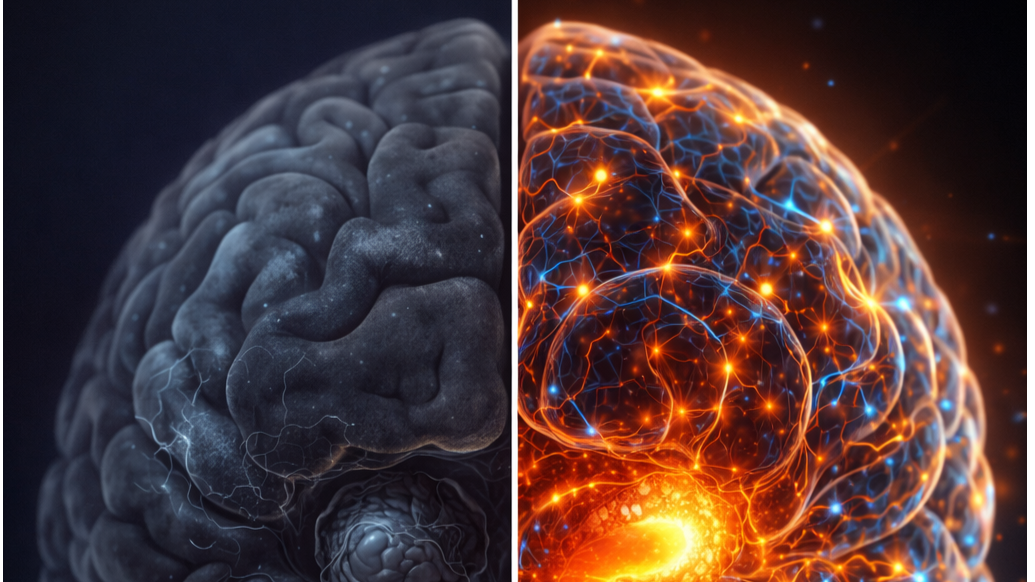
Chronic stress and depression are toxic to the brain. They can actually cause the hippocampus (the region responsible for memory and emotion) to physically shrink. Exercise triggers the release of a protein called Brain-Derived Neurotrophic Factor (BDNF). BDNF acts like fertilizer. It encourages neurogenesis—the growth of new brain cells—effectively repairing the structural damage caused by depression.
The Inflammation Connection: Burning Off the Blues

A leading theory in psychiatry is the Cytokine Hypothesis. It suggests that depression is actually an allergic reaction to chronic inflammation.
When you are stressed or sedentary, your body produces inflammatory markers called cytokines. These chemicals can travel to the brain and shut down the production of "feel-good" neurotransmitters like serotonin and dopamine.
How Exercise Helps: When your muscles contract, they release anti-inflammatory signaling molecules called myokines. These myokines act as a biological cleanup crew, purging the inflammation from your blood and allowing your brain's chemistry to reset.
The Dose: How Much to Heal?
The most common question is: "How much do I have to do?"
The good news is that you don't need to train like an Olympian. In fact, for mental health, consistency beats intensity.
The "SMILE" Study
A landmark study known as the SMILE trial (Standard Medical Intervention and Long-term Exercise) compared three groups:
Medication only (Zoloft).
Exercise only (30 mins, 3x/week).
Both.
The Results: After 4 months, all three groups showed similar improvements. Exercise was just as effective as medication. But the real shocker came 6 months later: The exercise group had the lowest relapse rate (8%), while the medication group had a significantly higher relapse rate (38%).

The Protocol
Type: Aerobic exercise (running, cycling, swimming) appears to have the strongest effect on BDNF.
Duration: 30 to 45 minutes.
Frequency: 3 to 5 times per week.
Intensity: Moderate (Zone 2). You should be sweating but able to talk. High-intensity is great, but moderate intensity is more sustainable for those struggling with motivation.
Conclusion: Movement is Medicine
If you are struggling with your mental health, the hardest lift of all is lifting yourself off the couch. The depression itself whispers that you are "too tired" or "it won't help."
That is the illness talking. Biology says otherwise.
Exercise is not a replacement for therapy or prescribed medication when needed, but it is a foundational pillar of mental hygiene. It reclaims your biology from the grip of stress. So, lace up your shoes. You are one workout away from a better mood.
Works Cited
Babyak, M., Blumenthal, J. A., Herman, S., et al. (2000). Exercise treatment for major depression: maintenance of therapeutic benefit at 10 months. Psychosomatic Medicine, 62(5), 633–638. https://doi.org/10.1097/00006842-200009000-00006
Cotman, C. W., & Berchtold, N. C. (2002). Exercise: a behavioral intervention to enhance brain health and plasticity. Trends in Neurosciences, 25(6), 295–301. https://doi.org/10.1016/s0166-2236(02)02143-4
Heijnen, S., Hommel, B., Kibele, A., & Colzato, L. S. (2016). Neuromodulation of Aerobic Exercise—A Review. Frontiers in Psychology, 6, 1890. https://doi.org/10.3389/fpsyg.2015.01890
Schuch, F. B., et al. (2016). Exercise as a treatment for depression: A meta-analysis adjusting for publication bias. Journal of Psychiatric Research, 77, 42–51. https://doi.org/10.1016/j.jpsychires.2016.02.023
Sparling, P. B., et al. (2003). Exercise activates the endocannabinoid system. NeuroReport, 14(17), 2209–2211.
