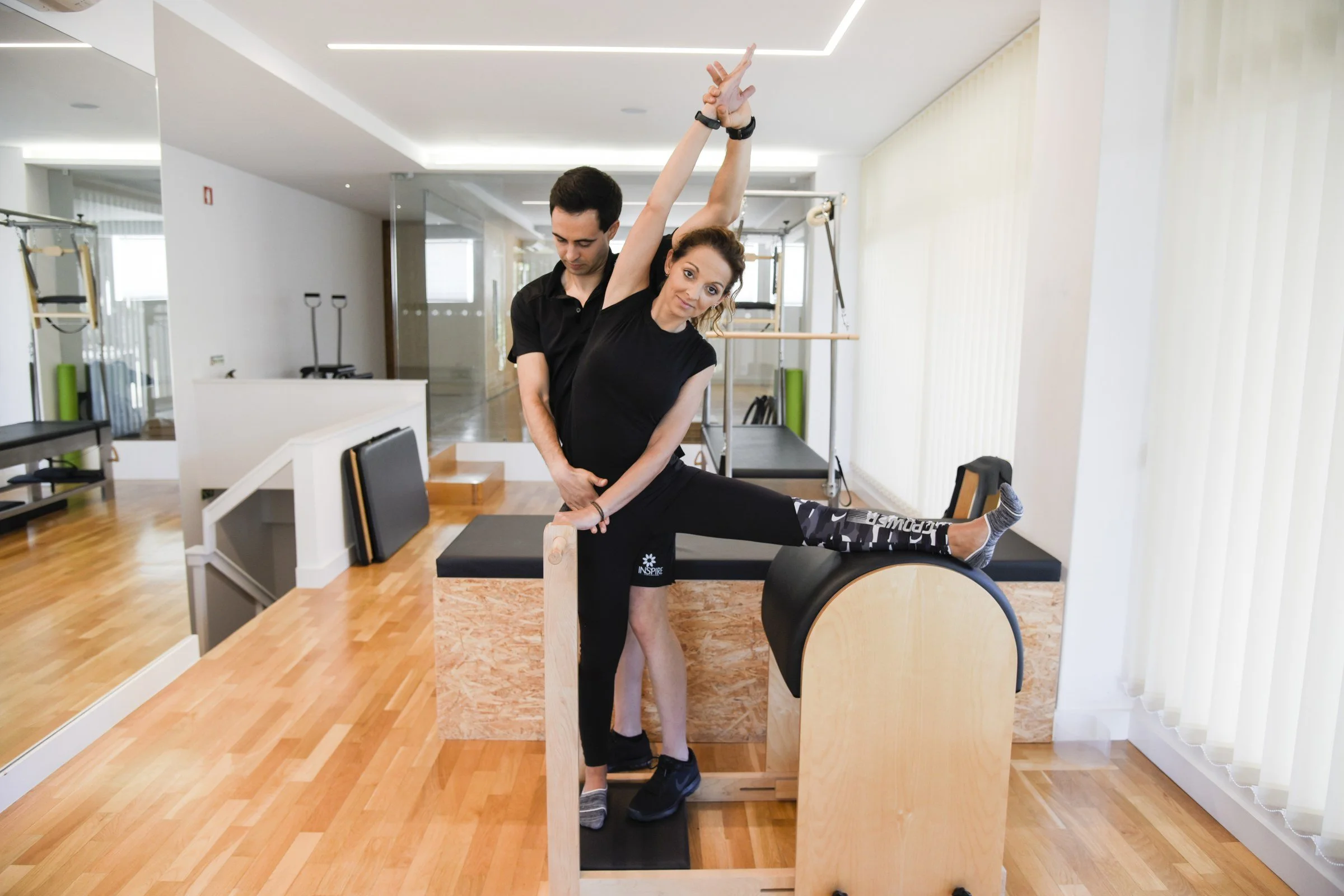
Photo: Helderoliveira / Wikimedia Commons, CC BY-SA 4.0 (cropped to 3:2 and resized). A woman and a personal trainer practice Pilates on a ladder barrel in a fully equipped Pilates studio.
Key Takeaways
Pilates beats doing little for back pain. A Cochrane review found low- to moderate-quality evidence that Pilates reduces pain and disability compared with minimal intervention (Yamato et al., 2015).
It often ranks first, but it is not clearly better. Pilates ranked at or near the top for pain in several network meta-analyses, yet WHO found insufficient evidence that any one exercise type beats another (Owen et al., 2020; WHO, 2023).
Core stability work helps early, then the edge fades. Its advantage over general exercise was not significant at 6 or 12 months (Wang et al., 2012).
Balance is a promising second use. In older adults, Pilates improved some fall-risk factors, but high-quality evidence that it reduces falls is lacking (da Silva et al., 2021).
Pilates is everywhere right now. In ACSM's 2027 fitness trends, "balance, flow, and core strength," a category that includes Pilates, rose from No. 5 to No. 3. ACSM is also clear that a high ranking "does not establish that a particular product or program is effective" (ACSM, 2026).
So what are the real Pilates benefits? The best-studied use is low back pain, which WHO calls the leading cause of disability worldwide, affecting an estimated 619 million people in 2020 (WHO, 2023). This post covers what the trials show for back pain, how Pilates compares with other exercise and core training, what it does for balance, and how to use it.
What Pilates Is, and What "Core" Means Here
Joseph Pilates developed his exercises in the 1920s. They can be done with or without specialized equipment and follow six basic principles: centering, concentration, control, precision, flow and breathing (Yamato et al., 2015).
"Centering" means tightening the "powerhouse," the trunk muscles. The Cochrane authors describe Pilates exercises as mainly involving isometric contractions of the core muscles that stabilize the body (Yamato et al., 2015). That overlaps with "core stability" or motor control training, which aims to control the spine and pelvis (Owen et al., 2020).
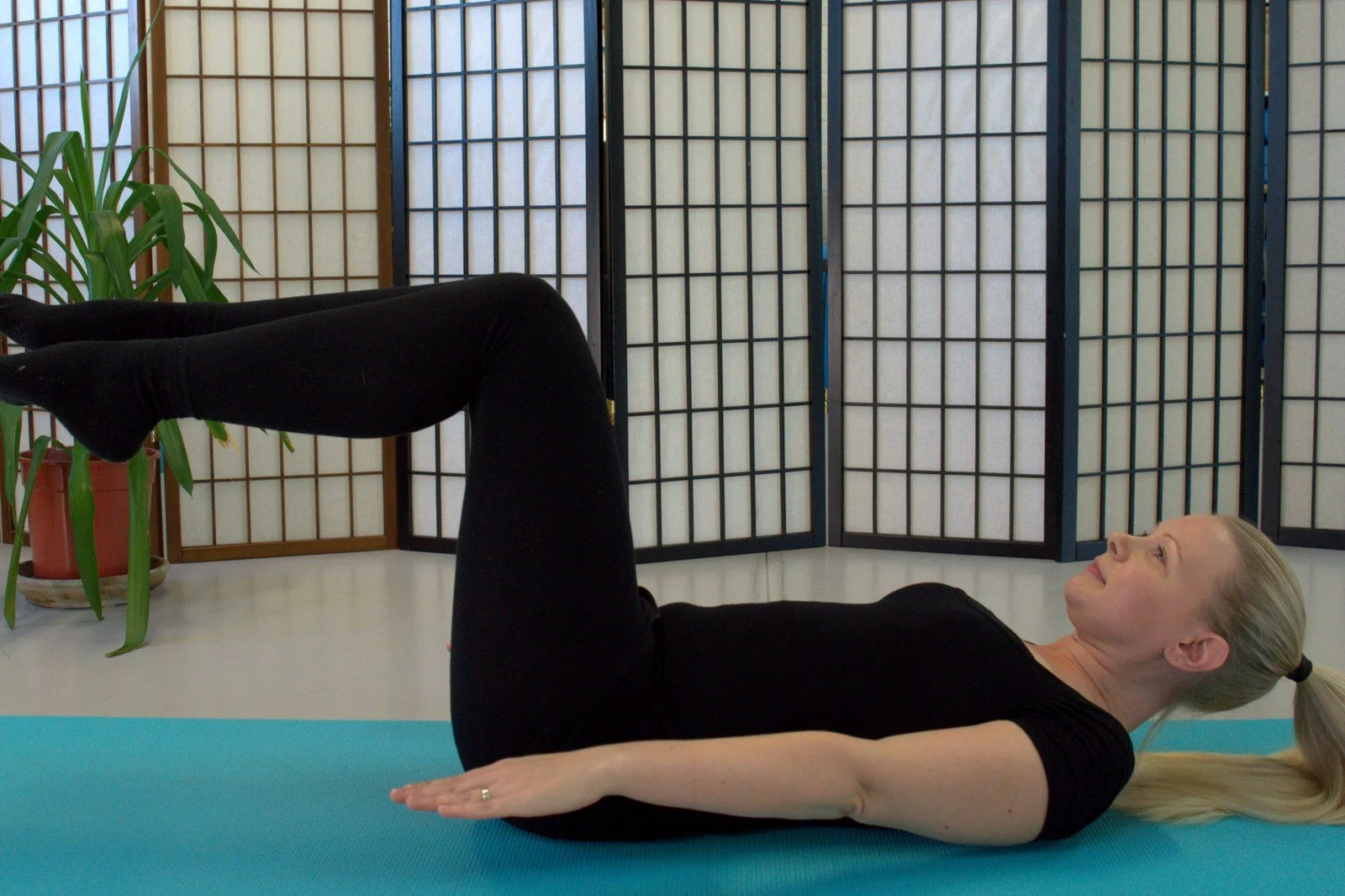
Photo: Helisusa / Wikimedia Commons, CC BY-SA 4.0 (cropped to 3:2 and resized). A woman performs a variation of “the hundred,” a classic mat Pilates exercise, as described by the photographer.
Pilates Benefits for Back Pain: The Trial Evidence
The Cochrane review included 10 randomized trials with 510 participants. Against minimal intervention, Pilates reduced pain by 14.05 points on a 0–100 scale in the short term (under three months) and by 10.54 points in the intermediate term, rated a medium effect. Disability also improved (Yamato et al., 2015).
Against other exercise, the picture changed. Disability did not differ significantly between Pilates and other exercise in the short or intermediate term. The authors found "no conclusive evidence that it is superior to other forms of exercises" and said the choice may come down to preference and cost (Yamato et al., 2015).
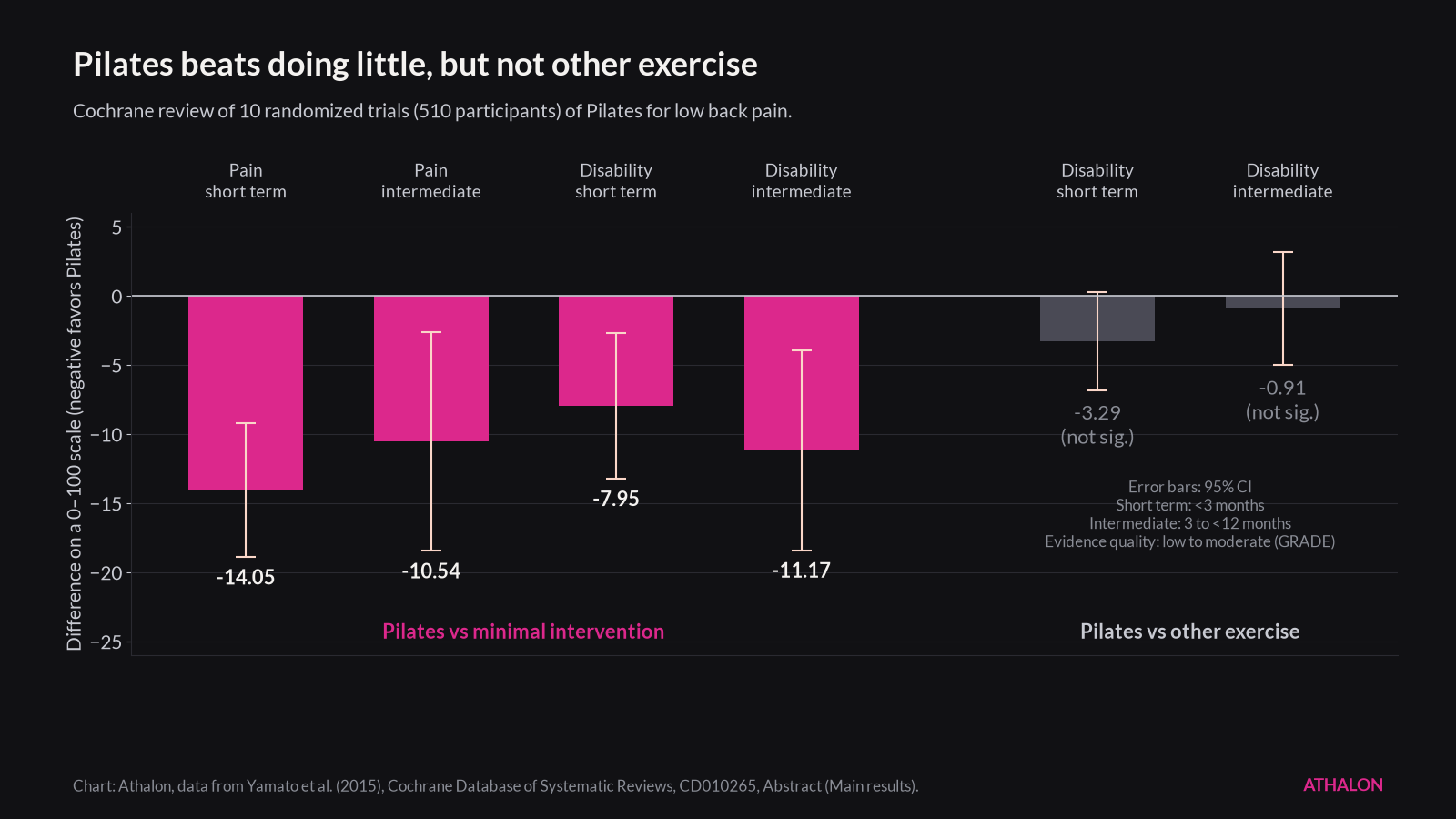
Chart: Athalon, data from Yamato et al. (2015), Cochrane Database of Systematic Reviews, CD010265, Abstract (Main results).
This matches the wider exercise literature. A 2021 Cochrane review of 249 trials found that exercise treatment reduced chronic low back pain by 15.2 points on a 0–100 scale versus no treatment, usual care or placebo, a clinically important difference (Hayden et al., 2021a).
Does Pilates Beat Other Exercise?
Network meta-analyses compare many exercise types at once. In one covering 89 studies (5,578 patients), Pilates had the highest probability of being best for pain, with a pooled standardized mean difference of −1.86 versus no treatment. Resistance and stabilization/motor control training ranked highest for physical function, and stretching did not differ from control for pain or function. The authors rated the evidence quality as low (Owen et al., 2020).
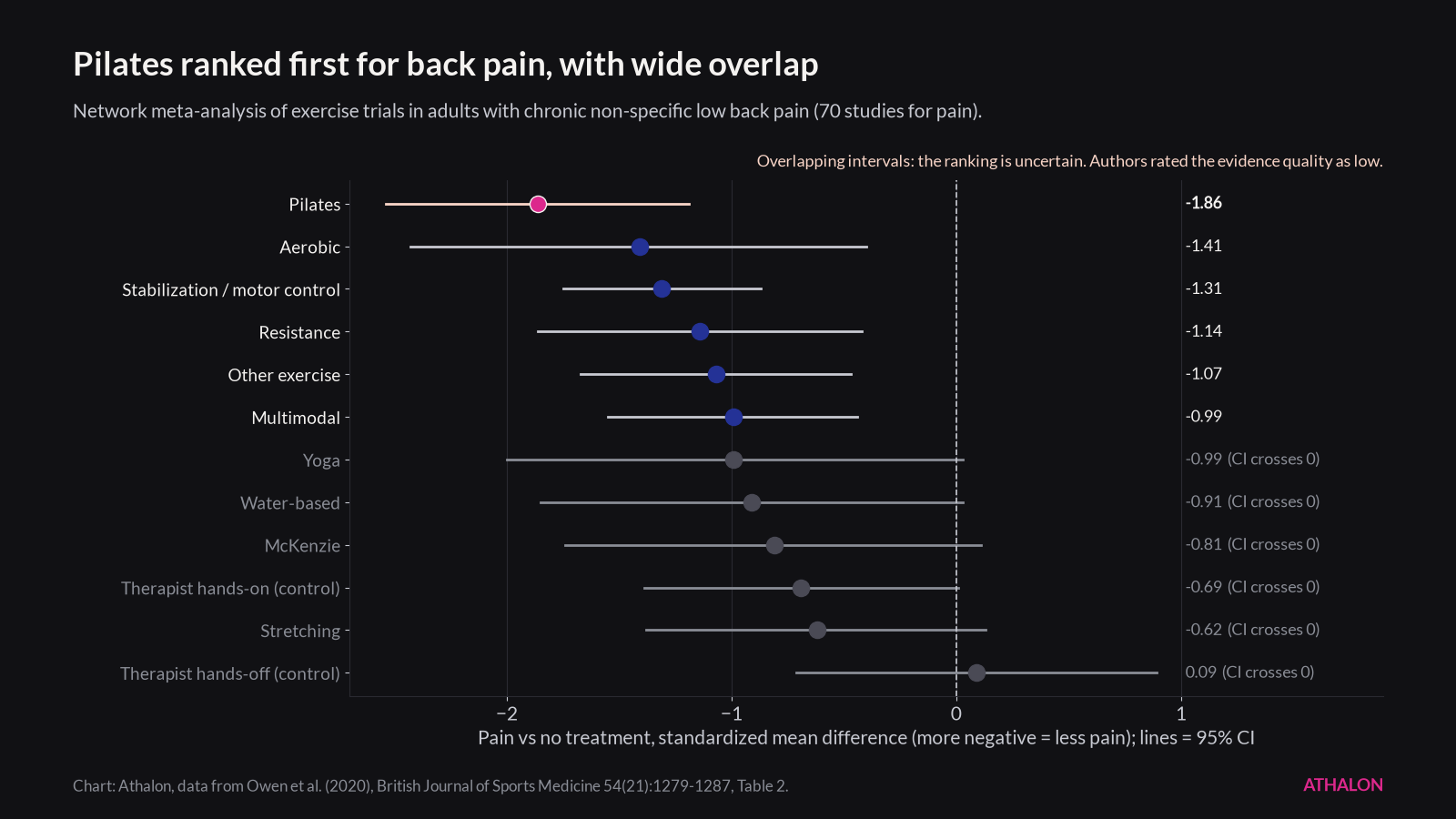
Chart: Athalon, data from Owen et al. (2020), British Journal of Sports Medicine, Table 2.
Two larger network meta-analyses also put Pilates at or near the top. One, covering 217 trials and 20,969 participants, found Pilates, McKenzie therapy and functional restoration more effective than other exercise types. It still concluded that people with chronic low back pain "should be encouraged to perform the exercise that they enjoy to promote adherence" (Hayden et al., 2021b). Another, of 118 trials, gave Pilates the highest ranking score (SUCRA) for reducing pain (93%) and disability (98%) (Fernández-Rodríguez et al., 2022).
WHO's 2023 guideline is more cautious. It says structured exercise "may be offered" (a conditional recommendation, low-certainty evidence) and that there is "currently insufficient evidence to conclude that one exercise modality is more or less beneficial and/or acceptable than another" (WHO, 2023).
Core Stability Training: An Early Edge That Fades
If you follow the McGill Big 3 from our post on stability and back pain, this is the research context for core work. A meta-analysis of 5 trials (414 participants) compared core stability exercise with general exercise for chronic low back pain. Core stability reduced pain more at the end of the program, by 1.29 points on pain-rating scales, and improved disability (Wang et al., 2012).
The gap did not last. At 6 and 12 months, pain did not differ significantly between the groups (Wang et al., 2012).
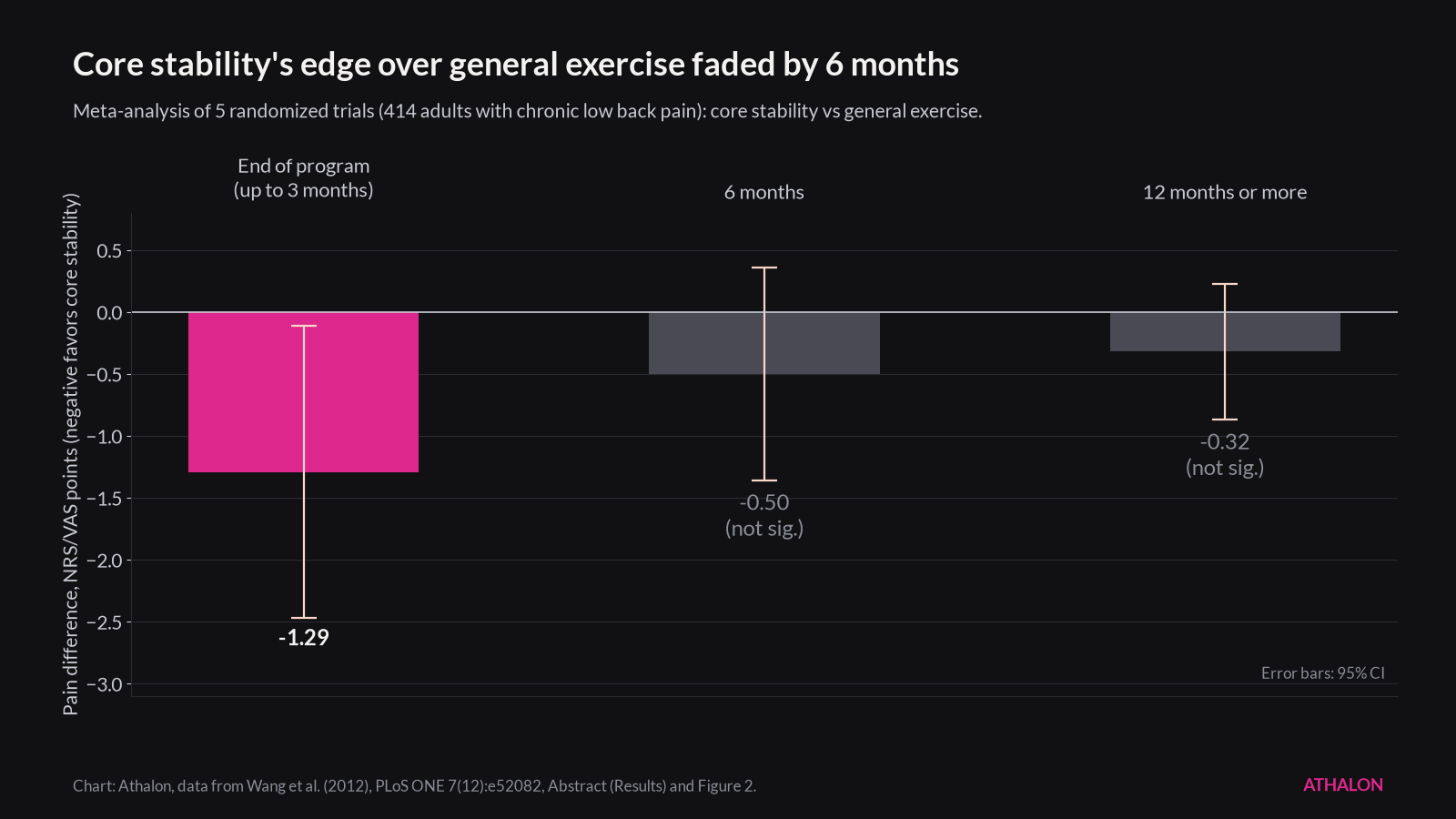
Chart: Athalon, data from Wang et al. (2012), PLoS ONE, Abstract (Results) and Figure 2.
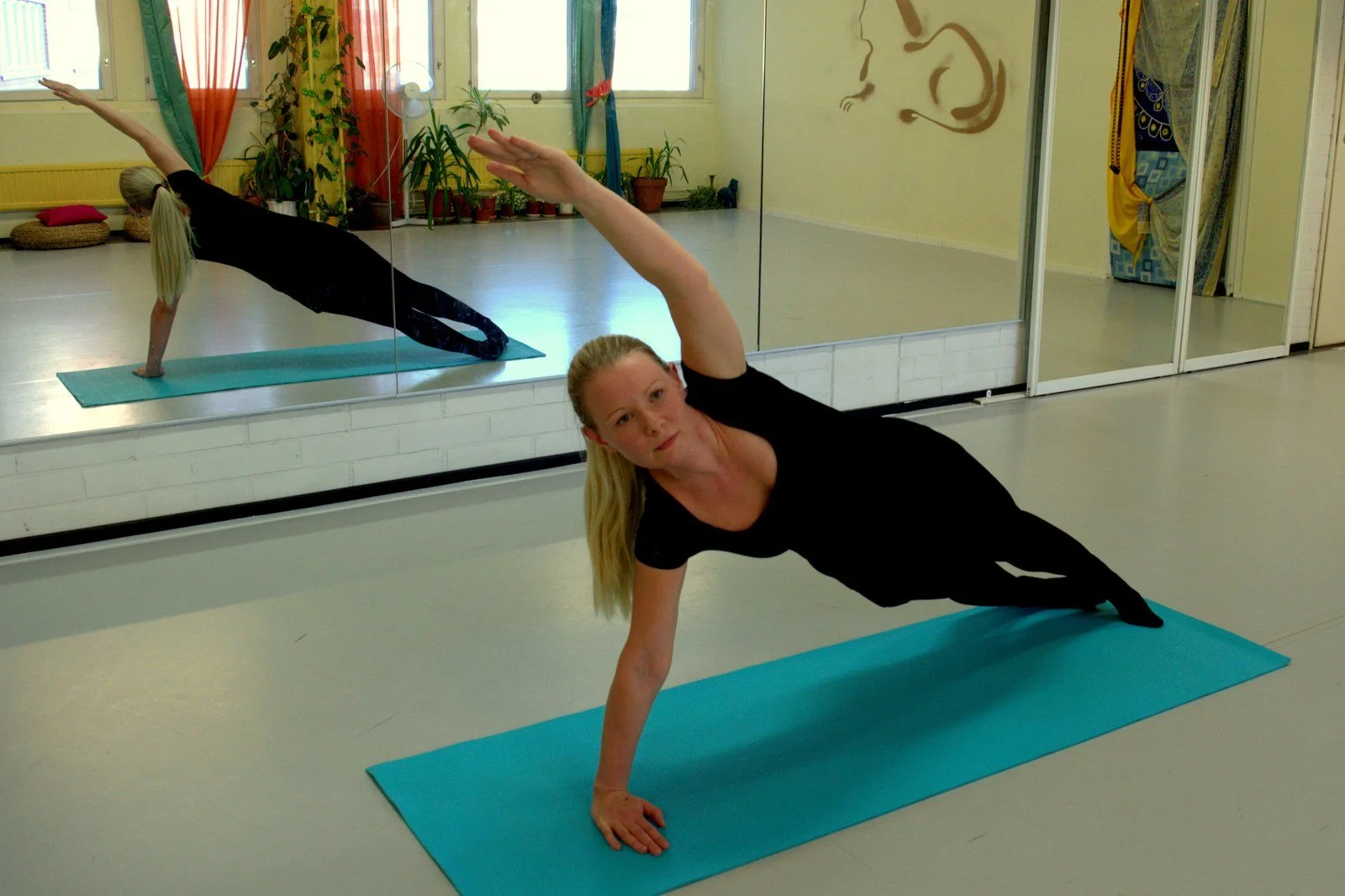
Photo: Helisusa / Wikimedia Commons, CC BY-SA 4.0 (cropped to 3:2 and resized). A woman holds a side plank, one of the Pilates moves in the photographer’s series, in a mirrored studio.
Pilates for Balance in Older Adults
Balance is the next most common use. A 2023 meta-analysis found that 8 of 15 Pilates interventions significantly improved older adults' balance (Sampaio et al., 2023). Another review of 12 studies (702 healthy older adults) found that Pilates improved mobility, fear of falling and side-to-side postural stability versus control groups. It also noted "an absence of high-quality evidence" on whether Pilates reduces falls themselves (da Silva et al., 2021). For more on the body-awareness side of balance, see our post on proprioception.
How to Use Pilates and Core Training Based on the Evidence
Choose the exercise you will keep doing. Pilates is a strong option, but the guidance favors adherence over a specific method (review conclusion and guideline) (Hayden et al., 2021b; WHO, 2023).
Train 1–2 sessions per week, at minimum. The most beneficial programs included at least 1 to 2 sessions per week of Pilates or strength exercises (from a network meta-analysis, not a single dose trial) (Fernández-Rodríguez et al., 2022).
Build enough volume, ideally with guidance. WHO notes that personalized, supervised programs reaching at least 20 hours of total time were generally more beneficial (WHO, 2023).
Pair core work with general training. Core stability's edge faded within 6 months, so combining it with resistance or aerobic work is a sensible inference, not a tested protocol (Wang et al., 2012; Owen et al., 2020).
Expect some soreness. In back-pain exercise trials, reported harms were mostly minor, such as muscle soreness (Hayden et al., 2021a).
Limitations
Most of this evidence is low to moderate quality. Exercise is hard to blind: 79% of trials in the 2021 Cochrane review were at risk of performance bias (Hayden et al., 2021a). Pilates trials are small; the network meta-analysis included 13 Pilates studies with 350 patients (Owen et al., 2020). Two authors of the Pilates Cochrane review had run Pilates trials themselves, and they disclosed this (Yamato et al., 2015). This is not medical advice. If you have back pain with leg numbness, weakness or pain after an injury, see a qualified clinician first.
Conclusion: Pilates Works, Just Not Uniquely
Pilates is a well-supported option for chronic low back pain and a reasonable tool for balance. It beats doing little, and it often ranks near the top when exercise types are compared.
The best exercise for your back is still the one you will repeat for months. Use Pilates and core work as part of a broader plan that includes strength and conditioning, and judge it by how you feel and move over time.
Make consistency visible. In the Athalon app you can log your lifts and runs, create competitions with friends and see where you stand on the leaderboard, so the training around your Pilates sessions stays on track. Download Athalon on the App Store.
Frequently Asked Questions
Q: Is Pilates good for lower back pain?
A: Yes, compared with minimal intervention. A Cochrane review found low- to moderate-quality evidence that Pilates reduces pain and disability, but no conclusive evidence that it beats other exercise (Yamato et al., 2015).
Q: Is Pilates better than strength training for back pain?
A: Not clearly. Pilates ranked first for pain in one network meta-analysis, while resistance and stabilization training ranked highest for physical function, and the evidence was low quality (Owen et al., 2020).
Q: How often should I do Pilates?
A: The most beneficial programs in one network meta-analysis included at least 1 to 2 sessions per week of Pilates or strength exercises (Fernández-Rodríguez et al., 2022).
Q: Does core training prevent back pain long term?
A: The evidence does not show that. Core stability beat general exercise at the end of programs for people who already had chronic pain, but not at 6 or 12 months (Wang et al., 2012).
References
American College of Sports Medicine. (2026, October 20). Wearables hold top spot in ACSM's 2027 fitness trends. https://acsm.org/2027-fitness-trends/
da Silva, L. D., Shiel, A., & McIntosh, C. (2021). Pilates reducing falls risk factors in healthy older adults: A systematic review and meta-analysis. Frontiers in Medicine, 8, 708883. https://doi.org/10.3389/fmed.2021.708883
Fernández-Rodríguez, R., Álvarez-Bueno, C., Cavero-Redondo, I., Torres-Costoso, A., Pozuelo-Carrascosa, D. P., Reina-Gutiérrez, S., Pascual-Morena, C., & Martínez-Vizcaíno, V. (2022). Best exercise options for reducing pain and disability in adults with chronic low back pain: Pilates, strength, core-based, and mind-body. A network meta-analysis. Journal of Orthopaedic & Sports Physical Therapy, 52(8), 505–521. https://doi.org/10.2519/jospt.2022.10671
Hayden, J. A., Ellis, J., Ogilvie, R., Malmivaara, A., & van Tulder, M. W. (2021a). Exercise therapy for chronic low back pain. Cochrane Database of Systematic Reviews, 2021(9), CD009790. https://doi.org/10.1002/14651858.CD009790.pub2
Hayden, J. A., Ellis, J., Ogilvie, R., Stewart, S. A., Bagg, M. K., Stanojevic, S., Yamato, T. P., & Saragiotto, B. T. (2021b). Some types of exercise are more effective than others in people with chronic low back pain: A network meta-analysis. Journal of Physiotherapy, 67(4), 252–262. https://doi.org/10.1016/j.jphys.2021.09.004
Owen, P. J., Miller, C. T., Mundell, N. L., Verswijveren, S. J. J. M., Tagliaferri, S. D., Brisby, H., Bowe, S. J., & Belavy, D. L. (2020). Which specific modes of exercise training are most effective for treating low back pain? Network meta-analysis. British Journal of Sports Medicine, 54(21), 1279–1287. https://doi.org/10.1136/bjsports-2019-100886
Sampaio, T., Encarnação, S., Santos, O., Narciso, D., Oliveira, J. P., Teixeira, J. E., Forte, P., Morais, J. E., Vasques, C., & Monteiro, A. M. (2023). The effectiveness of Pilates training interventions on older adults' balance: A systematic review and meta-analysis of randomized controlled trials. Healthcare, 11(23), 3083. https://doi.org/10.3390/healthcare11233083
Wang, X.-Q., Zheng, J.-J., Yu, Z.-W., Bi, X., Lou, S.-J., Liu, J., Cai, B., Hua, Y.-H., Wu, M., Wei, M.-L., Shen, H.-M., Chen, Y., Pan, Y.-J., Xu, G.-H., & Chen, P.-J. (2012). A meta-analysis of core stability exercise versus general exercise for chronic low back pain. PLoS ONE, 7(12), e52082. https://doi.org/10.1371/journal.pone.0052082
World Health Organization. (2023). WHO guideline for non-surgical management of chronic primary low back pain in adults in primary and community care settings. https://www.who.int/publications/i/item/9789240081789
Yamato, T. P., Maher, C. G., Saragiotto, B. T., Hancock, M. J., Ostelo, R. W. J. G., Cabral, C. M. N., Menezes Costa, L. C., & Costa, L. O. P. (2015). Pilates for low back pain. Cochrane Database of Systematic Reviews, 2015(7), CD010265. https://doi.org/10.1002/14651858.CD010265.pub2
