Blood Flow Restriction: Cheat Code for Muscle Growth

When you step into a gym, you’re likely to see athletes lifting heavy weights, pushing their limits to build muscle. It’s conventional wisdom—strength training is synonymous with high mechanical tension, large loads, and the unrelenting need for blood flow to supply oxygen and nutrients to working muscles. But what if this well-established norm could be reimagined?
Enter Blood Flow Restriction (BFR) training, a groundbreaking methodology that challenges everything we know about muscle growth. While traditional fitness dogma insists on heavy lifting as the path to hypertrophy, BFR flips this paradigm on its head. By strategically restricting blood flow to muscles during exercise, BFR allows you to achieve significant muscle growth with lighter weights, often as low as 20-30% of your 1-rep max.
What is BFR?
(And No, It’s Not Dangerous)
Also known as "Kaatsu" training (originating in Japan), BFR involves placing a specialized cuff or band around the top of a limb (arm or leg) while exercising. The goal is partial occlusion. You want to apply enough pressure to compress the veins (preventing blood from leaving the muscle) but not enough to compress the arteries (allowing oxygenated blood to still enter the muscle).
This creates a pooling effect. Blood rushes in, but it can’t get out. The muscle swells, oxygen levels drop, and metabolic waste products accumulate rapidly. To your body, this sounds like a crisis—and its response is exactly what we want.
The Science: Hacking the Size Principle
To understand why this works, you have to understand Henneman's Size Principle.
BFR works by applying a tourniquet-like device to the upper part of the limb, restricting venous blood flow while allowing arterial blood to still enter. This leads to a buildup of metabolic byproducts in the muscle, such as lactic acid, which creates the "burn" sensation commonly associated with intense exercise. These byproducts signal the body to increase muscle protein synthesis and promote muscle growth, even without the heavy mechanical tension typically required for hypertrophy.
Normally, when you lift a light weight, your body is lazy. It recruits only your small, endurance-based "Type I" muscle fibers. Only when those fibers fatigue (or the weight gets heavy) does your body call in the big guns: the large, growth-prone "Type II" fibers. BFR "hacks" this order. Because the blood flow restriction depletes oxygen so quickly, the Type I fibers fatigue almost instantly—even with light weight. Your brain is forced to recruit the massive Type II fibers immediately to compensate.
The Result: You get "heavy weight" muscle fiber recruitment while lifting "light weight" loads (often as low as 20-30% of your max).
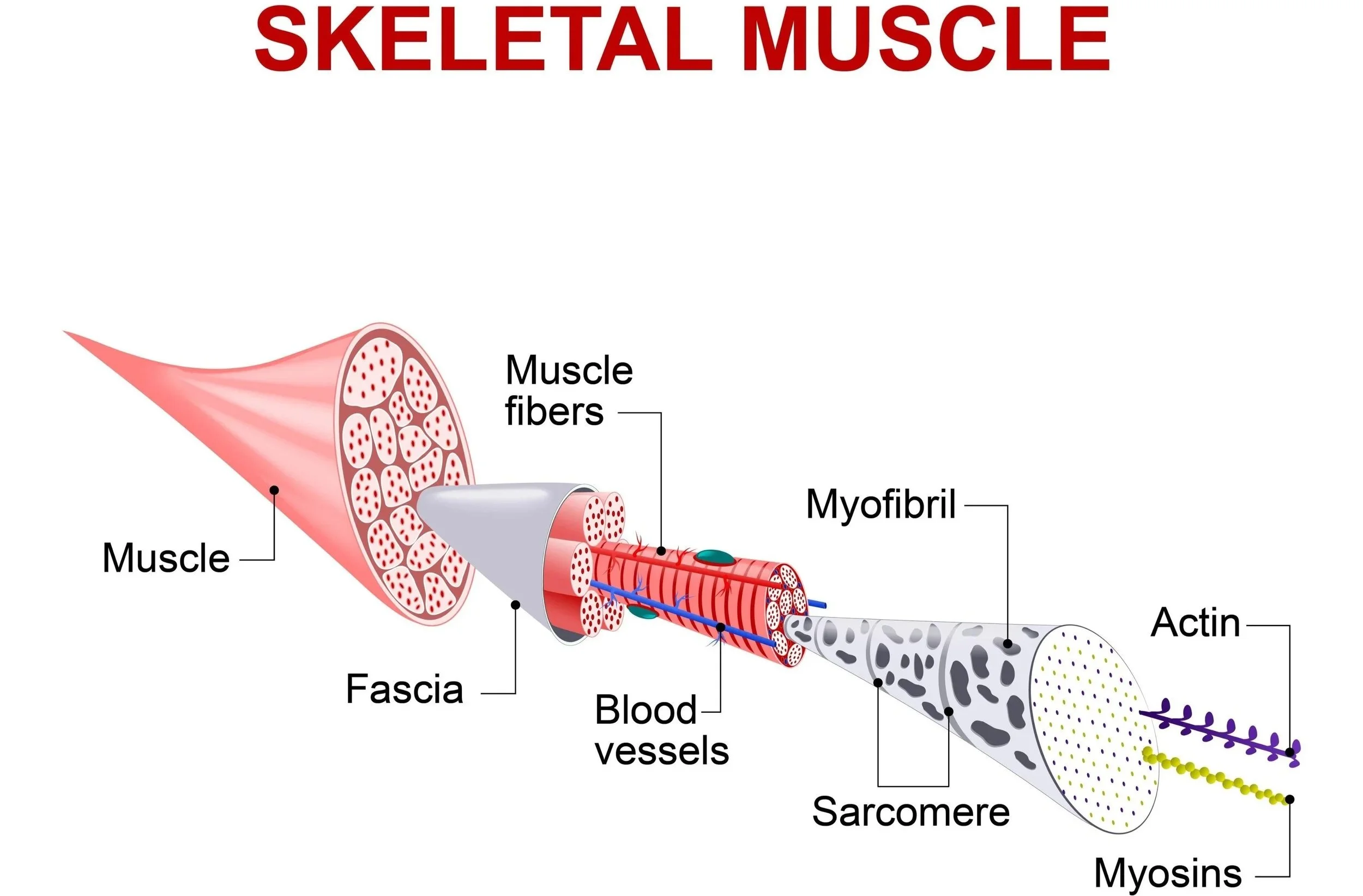
The Three Mechanisms of BFR Growth
BFR triggers hypertrophy (growth) through three distinct pathways that rarely happen simultaneously with standard training:
Metabolic Stress: The accumulation of lactate and hydrogen ions is massive because the blood can't wash them away. This acidic environment triggers a potent release of Growth Hormone—up to 290 times baseline levels, according to seminal research.
Cellular Swelling: The pooling blood forces fluid into the muscle cells, causing them to swell. This pressure is sensed by the cell as a threat to its integrity, prompting it to reinforce its structure by synthesizing more protein. This is often called the "pump," but biologically, it's an anabolic signal.
Myostatin Inhibition: Myostatin is a protein that acts as a brake on muscle growth. BFR has been shown to significantly downregulate (turn off) myostatin, effectively taking the foot off the brake and allowing for rapid hypertrophy.
Who Should Use BFR?
While bodybuilders love it for the "pump," BFR is actually a game-changer for longevity and rehabilitation.
The Injured: If you have knee pain or tendonitis and can't squat heavy, BFR allows you to maintain (and even build) leg muscle using practically zero weight, sparing your joints.
The Traveling Athlete: Can’t find a gym? BFR allows you to get a hypertrophy-stimulus workout using just hotel resistance bands or bodyweight.
The Aging Lifter: As we age, heavy loads can be tough on connective tissue. BFR provides a way to build muscle—sarcopenia's worst enemy—without the orthopedic cost of heavy lifting.

How to Do It: The "30-15-15-15" Protocol
Safety is paramount. Never use a makeshift tourniquet; use bands designed for BFR that are wide and adjustable. You should tighten them to a "7 out of 10" tightness—snug, but not painful. If your limb goes numb, it's too tight.
The classic, research-backed protocol is:
Load: 30% of your 1-Rep Max (very light).
Set 1: 30 Reps (to deplete oxygen).
Rest: 30 Seconds (keep the bands ON).
Set 2: 15 Reps.
Rest: 30 Seconds.
Set 3: 15 Reps.
Rest: 30 Seconds.
Set 4: 15 Reps.
Finish: Remove bands.
The Takeaway: Work Smarter, Not Just Heavier
Blood Flow Restriction (BFR) challenges conventional thinking and forces you to embrace lighter weights, often those you might consider too easy. But the science behind it is irrefutable. By strategically manipulating blood flow, BFR enables you to recruit muscle fibers in a way that typically demands heavier, more dangerous loads.
This isn't about bypassing effort—it's about optimizing your body's natural processes. Whether you're recovering from an injury or pushing toward new levels of muscle growth, sometimes the key to progress is as simple as applying controlled pressure.
Works Cited
Loenneke, J. P., Wilson, J. M., Marín, P. J., Zourdos, M. C., & Bemben, M. G. (2012). Low intensity blood flow restriction training: a meta-analysis. European Journal of Applied Physiology, 112(5), 1849–1859. https://doi.org/10.1007/s00421-011-2167-x
Takarada, Y., Nakamura, Y., Aruga, S., Onda, T., Miyazaki, S., & Ishii, N. (2000). Rapid increase in plasma growth hormone after low-intensity resistance exercise with vascular occlusion. Journal of Applied Physiology, 88(1), 61–65. https://doi.org/10.1152/jappl.2000.88.1.61
Pearson, S. J., & Hussain, S. R. (2015). A review on the mechanisms of blood-flow restriction resistance training-induced muscle hypertrophy. Sports Medicine, 45(2), 187–200. https://doi.org/10.1007/s40279-014-0264-9
Scott, B. R., Loenneke, J. P., Slattery, K. M., & Dascombe, B. J. (2015). Exercise with blood flow restriction: an updated evidence-based approach for enhanced muscle growth. Sports Medicine, 45(3), 313–325. https://doi.org/10.1007/s40279-014-0288-1
Hughes, L., Paton, B., Rosenblatt, B., Gissane, C., & Patterson, S. D. (2017). Blood flow restriction training in clinical musculoskeletal rehabilitation: a systematic review and meta-analysis. British Journal of Sports Medicine, 51(13), 1003–1011. https://doi.org/10.1136/bjsports-2016-097071
